
A practical guide for first-opinion vets
As a referral clinician, one of the questions I am asked most often is not whether a case can be referred, but when referral is likely to add the most value for the patient, the client and the primary care practice.
Many medical cases can and should continue to be managed very successfully in first opinion. In other situations, however, the case reaches a point where a more structured diagnostic environment, advanced imaging, nurse-supported investigation, or access to additional procedures can make the next step clearer and more efficient.
At Arthurs Veterinary Specialists (AVS), I am gradually developing an Internal Medicine and Diagnostics referral service alongside my ongoing work through Mobile Vet Referral. This means local practices now have two complementary options available through me:
- a mobile service for cases that are well suited to on-site imaging and ambulatory support
- a fixed referral service at AVS for cases that would benefit from a more complete hospital-based diagnostic work-up
The mobile service is very much continuing. The AVS service is intended as an additional option, particularly for those patients where the next stage of investigation is difficult to achieve in practice or through a mobile visit alone.
When referral is likely to be helpful
A medicine case may be particularly suitable for referral when:
The case has become diagnostically complex
Some patients reach a stage where the likely differentials remain broad despite appropriate first-line investigation. In these situations, a structured referral work-up can help prioritise the most useful next steps and avoid prolonged, fragmented investigation.
Advanced imaging or procedures are likely to change management
Cases involving chronic gastrointestinal disease, respiratory disease, selected urinary tract disease, more complex abdominal pathology, or certain cardiology presentations may benefit from access to CT, endoscopy, more advanced ultrasound assessment, sampling procedures, or monitored sedation and anaesthesia.
The patient needs a coordinated day-case or inpatient work-up
Some investigations are difficult to deliver efficiently when they need multiple steps, dedicated nursing support, monitoring, anaesthesia, imaging, and sample handling within a short timeframe. A referral setting can make these work-ups more practical and often more streamlined for both the owner and the referring vet.
The case would benefit from a second-line diagnostic plan
Referral is not only for rare or dramatic cases. Sometimes the most useful role of referral is simply to provide a clear plan: what is most likely, what needs to be ruled in or out next, and what can realistically be managed back in first opinion.
What can be referred to AVS?
The service at AVS is particularly suited to selected medicine and diagnostics cases, including:
- complex internal medicine investigations
- abdominal ultrasound cases requiring a more complete work-up
- gastrointestinal, hepatobiliary and pancreatic investigations
- respiratory work-ups, particularly where CT or endoscopy may be indicated
- urinary tract investigations
- selected cardiology and diagnostic imaging cases
- cases requiring a structured second opinion and a clear diagnostic pathway
What is the advantage of referral at AVS?
The main advantage is not simply “more tests”. It is the ability to investigate the right case in a more complete and coordinated environment.
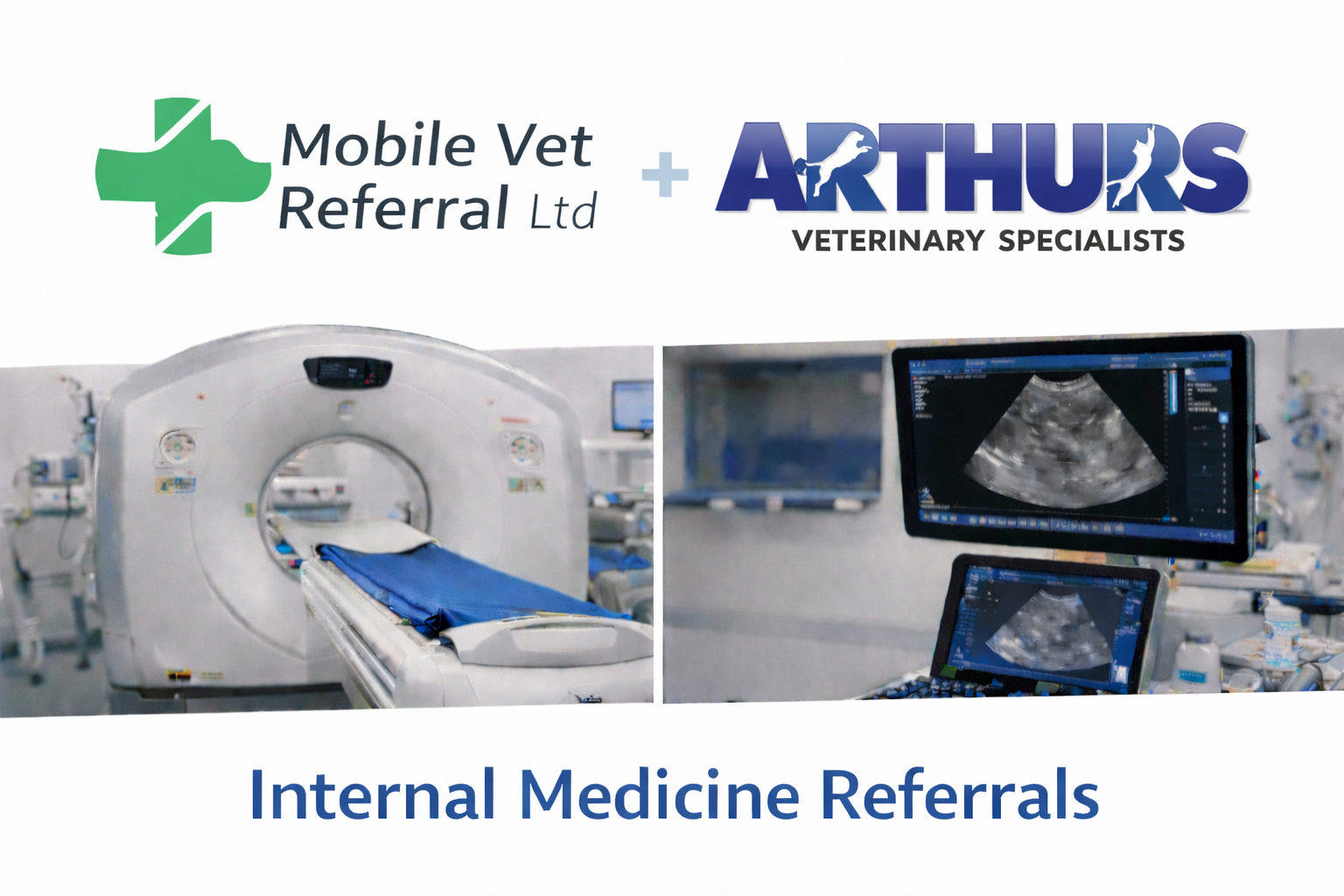
At AVS, this can include access to advanced imaging such as CT, dedicated nursing support, hospital-based monitoring, and the ability to combine consultation, imaging, procedures and ongoing case management in one setting when needed.
For some patients, this allows a more efficient and clinically useful diagnostic pathway than would be possible through a purely mobile or first-opinion format.
How does this fit with Mobile Vet Referral?
This is an important point: Mobile Vet Referral is not ending.
The aim is to offer local practices greater flexibility.
Some cases are ideal for a mobile service. Others reach a point where referral-level facilities make more sense. By offering both pathways, it becomes easier to decide what is most appropriate for the individual patient rather than trying to fit every case into one model.
In practical terms:
- if a case is well suited to mobile imaging or ambulatory support, it can still be seen through Mobile Vet Referral
- if a case would benefit from a more advanced diagnostic set-up, it can be referred to AVS
Working with referring practices
A successful referral service depends on trust, communication and clarity.
The aim of the AVS medicine and diagnostics service is to support local practices by providing thorough investigation, clear recommendations and prompt communication, while maintaining a collaborative relationship with the referring vet.
Referral should feel like an extension of the care already being provided, not a disruption to it.
If you would like to discuss a case
If you would like to discuss whether a case is better suited to the mobile service or referral through AVS, I would be very happy to advise.
Further details about the AVS Medicine and Diagnostics service can be found on our website, and cases can be discussed informally before referral where helpful.