
Clinical insight

When to Refer for Abdominal Ultrasound in Dogs and Cats

When to Refer for Abdominal Ultrasound in Dogs and Cats

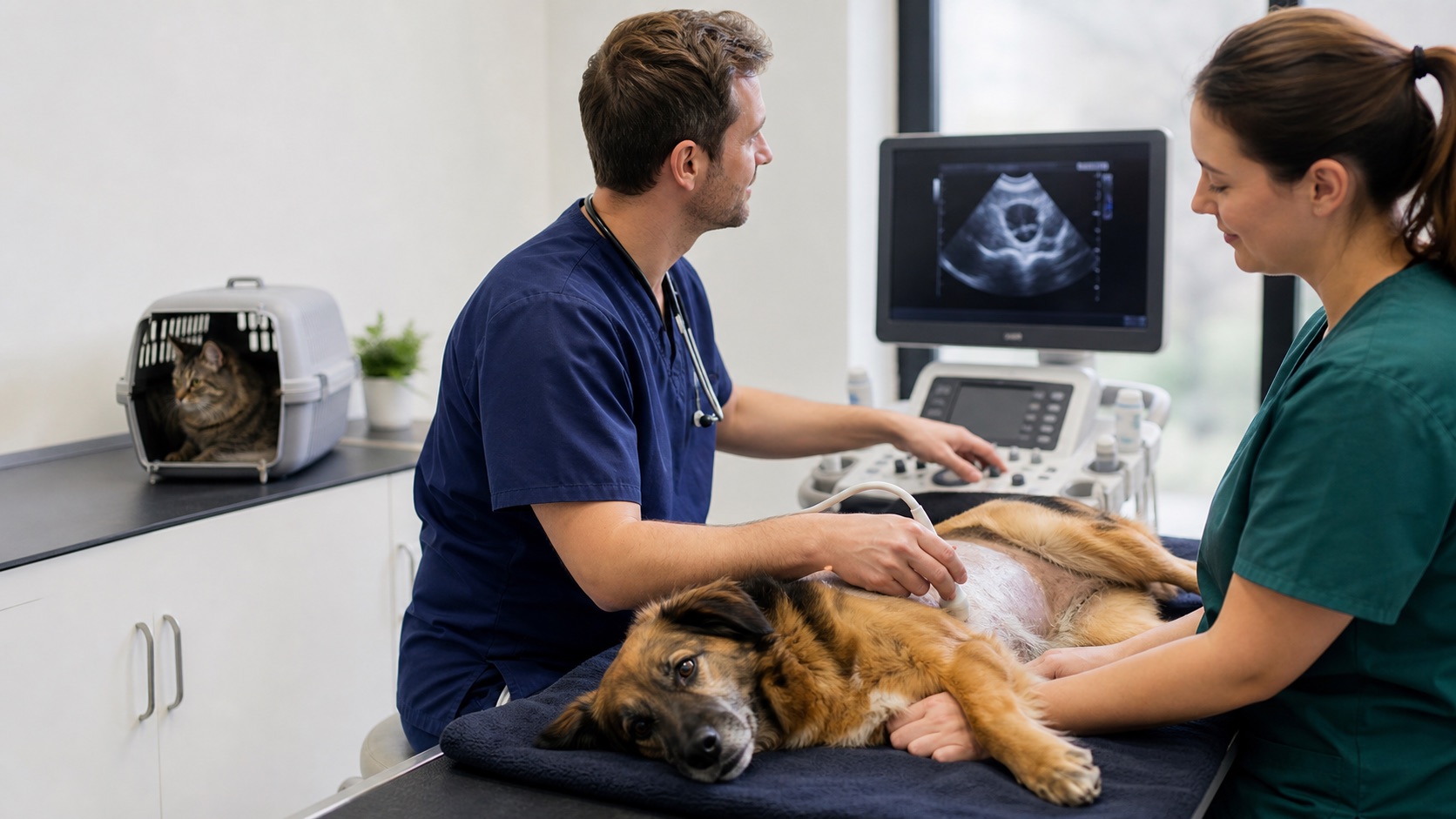
Abdominal ultrasound is one of the most useful diagnostic tools available to first-opinion vets, particularly when the clinical picture is not fully explained by examination, blood work or radiography.

It can also be one of the most helpful referral options for clients who need advanced imaging and interpretation, but where a full hospital referral is not always the right first step.

At Mobile Vet Referral, abdominal ultrasound can be used either as an outpatient scan and report, or as part of a wider internal medicine work-up. The best choice depends on the question you need the scan to answer.

This article is written for veterinary professionals and is intended to support, not replace, case-specific clinical judgement. Referral decisions should remain appropriate to the patient, the urgency of the problem, the client circumstances and the facilities available.

When abdominal ultrasound is particularly useful

Abdominal ultrasound is most valuable when there is a clear clinical question, or when it may change the next step in the case.

Common examples include:

  • chronic or recurrent vomiting
  • chronic diarrhoea or weight loss
  • unexplained hyporexia or lethargy
  • suspected hepatobiliary or pancreatic disease
  • urinary tract signs, renal changes or suspected obstruction
  • abdominal pain
  • pyrexia of unknown origin
  • suspected abdominal mass or organomegaly
  • staging or assessment of known neoplasia
  • investigation of unexplained effusions
  • guidance for fine-needle aspirates or biopsies, where appropriate

In many of these cases, ultrasound does not replace good first-opinion work-up. It sits alongside the clinical history, physical examination, blood tests, urinalysis, radiographs and any previous response to treatment.

The most useful referrals are usually those where the imaging question is specific: for example, “is there evidence of intestinal thickening or lymphadenopathy?”, “is this liver enzyme increase associated with structural hepatobiliary disease?”, or “is there a urinary tract abnormality that explains the clinical signs?”
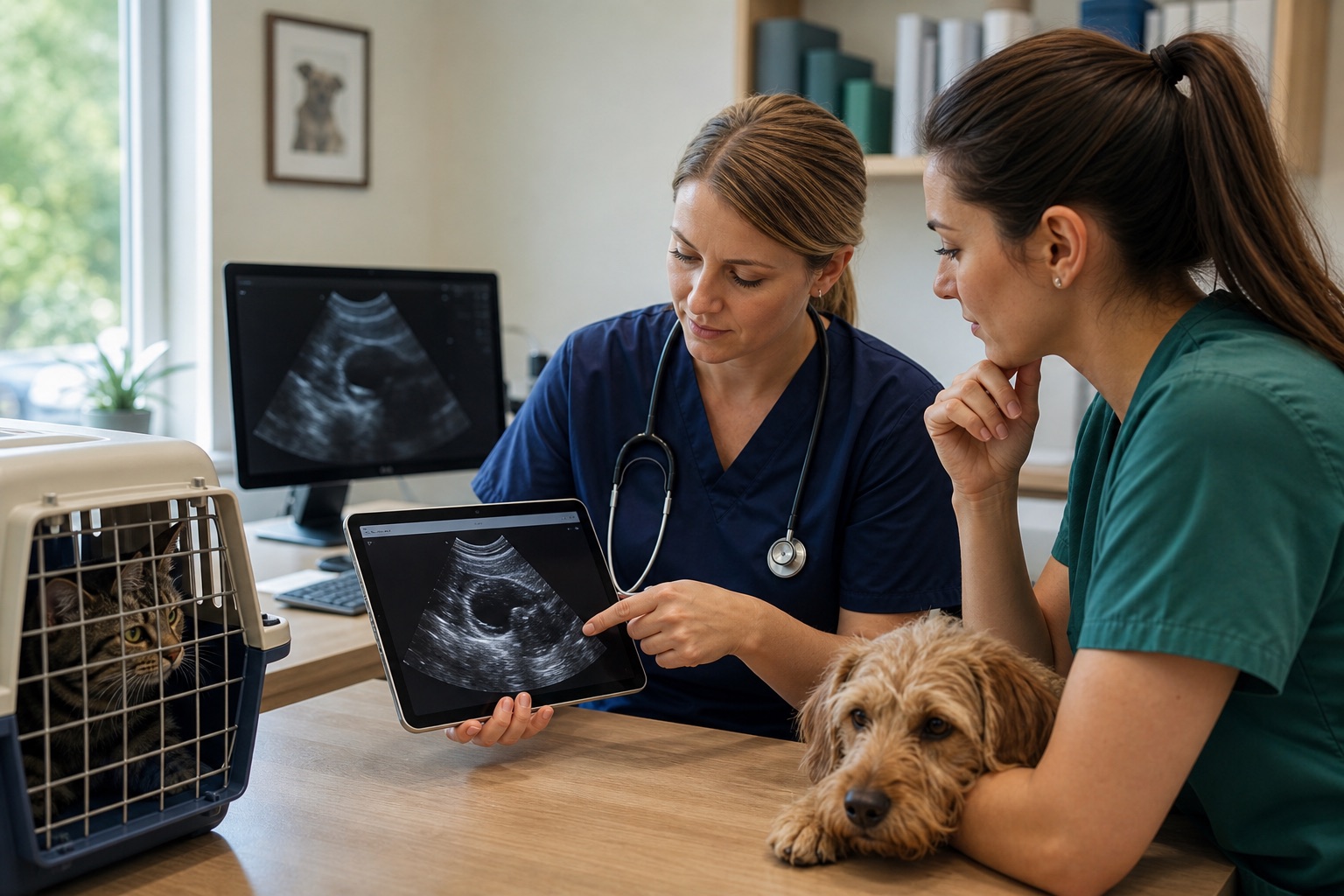
Two veterinary professionals reviewing abdominal ultrasound images and clinical notes during a referral discussion.

Scan and report, or full medicine referral?

A scan and report can be appropriate when the referring vet is primarily looking for imaging information to support their own case management. This works well when the patient is stable, the clinical question is focused, and the first-opinion vet is comfortable continuing with the treatment plan once the report is available.

Examples may include:

  • stable patients needing further investigation of chronic gastrointestinal signs
  • evaluation of abdominal organs after abnormal blood results
  • assessment of a suspected mass, effusion or organ change
  • imaging before deciding whether further sampling or referral is required
  • follow-up imaging where previous findings need reassessment

A wider medicine referral may be more useful when the case needs clinical interpretation beyond the scan itself. This is often the better route when there are multiple problems, significant systemic illness, complex blood results, unexplained weight loss, recurrent pyrexia, suspected endocrine disease, or when the owner would benefit from a joined-up diagnostic and treatment plan.

In those cases, ultrasound is still important, but it is interpreted as part of the whole patient rather than as a standalone test.

What abdominal ultrasound can and cannot answer

Ultrasound is excellent for assessing the structure, size and architecture of many abdominal organs. It can help identify changes affecting the gastrointestinal tract, liver, gallbladder, spleen, kidneys, bladder, prostate, adrenal glands, lymph nodes and peritoneal cavity.

It can also help decide whether sampling is indicated, whether a lesion is accessible, and whether further diagnostics such as endoscopy, cytology, biopsy, CT or surgical exploration may be appropriate.

However, ultrasound is not always definitive on its own. Some inflammatory and neoplastic conditions can look similar, early disease may be subtle, and patient factors such as pain, body condition, gas, temperament or movement can affect image quality.

This is why the report is most useful when it is linked back to the clinical picture. A good ultrasound referral is not just about finding abnormalities; it is about deciding what those abnormalities mean for that individual dog or cat.

Cases where ultrasound may guide the next step

For chronic gastrointestinal cases, ultrasound can help assess intestinal layering, wall thickness, motility, lymph nodes, pancreas and other abdominal organs. This can be helpful when deciding whether medical management, endoscopy, further sampling or a broader medicine work-up is the most sensible next step.

For hepatobiliary cases, ultrasound can provide information about liver size and echotexture, gallbladder appearance, biliary tract changes, focal lesions, vascular features and associated abdominal findings. It can also help decide whether cytology or biopsy should be considered.

For urinary cases, ultrasound may identify changes affecting the kidneys, ureters, bladder or prostate, and can help investigate haematuria, recurrent urinary signs, suspected obstruction, renal changes or unexplained azotaemia.

For suspected abdominal masses or effusions, ultrasound can help localise the abnormality, assess whether other organs are involved, and guide discussion about sampling, prognosis and further referral options.

What information helps before referral?

The quality of the referral information makes a real difference to the value of the scan and report.

Where possible, it is helpful to include:

  • a concise clinical history and the main question you would like answered
  • current clinical signs and duration
  • relevant physical examination findings
  • blood results, urinalysis and blood pressure if available
  • radiographs or previous imaging reports
  • current medication, including recent steroids or antibiotics
  • whether the patient is stable, painful, sedatable or anxious
  • any owner constraints around budget, travel or further diagnostics

This does not need to be a long essay. A clear summary of the problem and the specific question is often the most useful part.

Local abdominal ultrasound referral support

Mobile Vet Referral provides professional, approachable and affordable referral support for first-opinion practices, including abdominal ultrasound, internal medicine consultations, endoscopy and selected outpatient diagnostic work-ups.

Abdominal ultrasound may be available either as a mobile service at your practice or through local referral clinic sessions, depending on the patient, location and the type of work-up required.

You can view local clinic options here:

Local Veterinary Referral Clinics

If you would like to refer a case, the referral form is available here:

Refer a Case

For non-urgent cases, sending the clinical history, recent blood results and the main question you would like answered is usually the best starting point. If you are unsure whether scan and report or a full medicine referral is more appropriate, you can include that in the referral and I will be happy to advise.

Discuss a case

Need a second pair of clinical eyes?

Share the case details and we’ll help identify the most useful next step.

Clinical insight

When to Refer for Abdominal Ultrasound in Dogs and Cats

When to Refer for Abdominal Ultrasound in Dogs and Cats

Abdominal ultrasound is one of the most useful diagnostic tools available to first-opinion vets, particularly when the clinical picture is not fully explained by examination, blood work or radiography.

It can also be one of the most helpful referral options for clients who need advanced imaging and interpretation, but where a full hospital referral is not always the right first step.

At Mobile Vet Referral, abdominal ultrasound can be used either as an outpatient scan and report, or as part of a wider internal medicine work-up. The best choice depends on the question you need the scan to answer.

This article is written for veterinary professionals and is intended to support, not replace, case-specific clinical judgement. Referral decisions should remain appropriate to the patient, the urgency of the problem, the client circumstances and the facilities available.

When abdominal ultrasound is particularly useful

Abdominal ultrasound is most valuable when there is a clear clinical question, or when it may change the next step in the case.

Common examples include:

  • chronic or recurrent vomiting
  • chronic diarrhoea or weight loss
  • unexplained hyporexia or lethargy
  • suspected hepatobiliary or pancreatic disease
  • urinary tract signs, renal changes or suspected obstruction
  • abdominal pain
  • pyrexia of unknown origin
  • suspected abdominal mass or organomegaly
  • staging or assessment of known neoplasia
  • investigation of unexplained effusions
  • guidance for fine-needle aspirates or biopsies, where appropriate

In many of these cases, ultrasound does not replace good first-opinion work-up. It sits alongside the clinical history, physical examination, blood tests, urinalysis, radiographs and any previous response to treatment.

The most useful referrals are usually those where the imaging question is specific: for example, “is there evidence of intestinal thickening or lymphadenopathy?”, “is this liver enzyme increase associated with structural hepatobiliary disease?”, or “is there a urinary tract abnormality that explains the clinical signs?”

Two veterinary professionals reviewing abdominal ultrasound images and clinical notes during a referral discussion.

Scan and report, or full medicine referral?

A scan and report can be appropriate when the referring vet is primarily looking for imaging information to support their own case management. This works well when the patient is stable, the clinical question is focused, and the first-opinion vet is comfortable continuing with the treatment plan once the report is available.

Examples may include:

  • stable patients needing further investigation of chronic gastrointestinal signs
  • evaluation of abdominal organs after abnormal blood results
  • assessment of a suspected mass, effusion or organ change
  • imaging before deciding whether further sampling or referral is required
  • follow-up imaging where previous findings need reassessment

A wider medicine referral may be more useful when the case needs clinical interpretation beyond the scan itself. This is often the better route when there are multiple problems, significant systemic illness, complex blood results, unexplained weight loss, recurrent pyrexia, suspected endocrine disease, or when the owner would benefit from a joined-up diagnostic and treatment plan.

In those cases, ultrasound is still important, but it is interpreted as part of the whole patient rather than as a standalone test.

What abdominal ultrasound can and cannot answer

Ultrasound is excellent for assessing the structure, size and architecture of many abdominal organs. It can help identify changes affecting the gastrointestinal tract, liver, gallbladder, spleen, kidneys, bladder, prostate, adrenal glands, lymph nodes and peritoneal cavity.

It can also help decide whether sampling is indicated, whether a lesion is accessible, and whether further diagnostics such as endoscopy, cytology, biopsy, CT or surgical exploration may be appropriate.

However, ultrasound is not always definitive on its own. Some inflammatory and neoplastic conditions can look similar, early disease may be subtle, and patient factors such as pain, body condition, gas, temperament or movement can affect image quality.

This is why the report is most useful when it is linked back to the clinical picture. A good ultrasound referral is not just about finding abnormalities; it is about deciding what those abnormalities mean for that individual dog or cat.

Cases where ultrasound may guide the next step

For chronic gastrointestinal cases, ultrasound can help assess intestinal layering, wall thickness, motility, lymph nodes, pancreas and other abdominal organs. This can be helpful when deciding whether medical management, endoscopy, further sampling or a broader medicine work-up is the most sensible next step.

For hepatobiliary cases, ultrasound can provide information about liver size and echotexture, gallbladder appearance, biliary tract changes, focal lesions, vascular features and associated abdominal findings. It can also help decide whether cytology or biopsy should be considered.

For urinary cases, ultrasound may identify changes affecting the kidneys, ureters, bladder or prostate, and can help investigate haematuria, recurrent urinary signs, suspected obstruction, renal changes or unexplained azotaemia.

For suspected abdominal masses or effusions, ultrasound can help localise the abnormality, assess whether other organs are involved, and guide discussion about sampling, prognosis and further referral options.

What information helps before referral?

The quality of the referral information makes a real difference to the value of the scan and report.

Where possible, it is helpful to include:

  • a concise clinical history and the main question you would like answered
  • current clinical signs and duration
  • relevant physical examination findings
  • blood results, urinalysis and blood pressure if available
  • radiographs or previous imaging reports
  • current medication, including recent steroids or antibiotics
  • whether the patient is stable, painful, sedatable or anxious
  • any owner constraints around budget, travel or further diagnostics

This does not need to be a long essay. A clear summary of the problem and the specific question is often the most useful part.

Local abdominal ultrasound referral support

Mobile Vet Referral provides professional, approachable and affordable referral support for first-opinion practices, including abdominal ultrasound, internal medicine consultations, endoscopy and selected outpatient diagnostic work-ups.

Abdominal ultrasound may be available either as a mobile service at your practice or through local referral clinic sessions, depending on the patient, location and the type of work-up required.

You can view local clinic options here:

Local Veterinary Referral Clinics

If you would like to refer a case, the referral form is available here:

Refer a Case

For non-urgent cases, sending the clinical history, recent blood results and the main question you would like answered is usually the best starting point. If you are unsure whether scan and report or a full medicine referral is more appropriate, you can include that in the referral and I will be happy to advise.

Discuss a case

Need a second pair of clinical eyes?

Share the case details and we’ll help identify the most useful next step.