
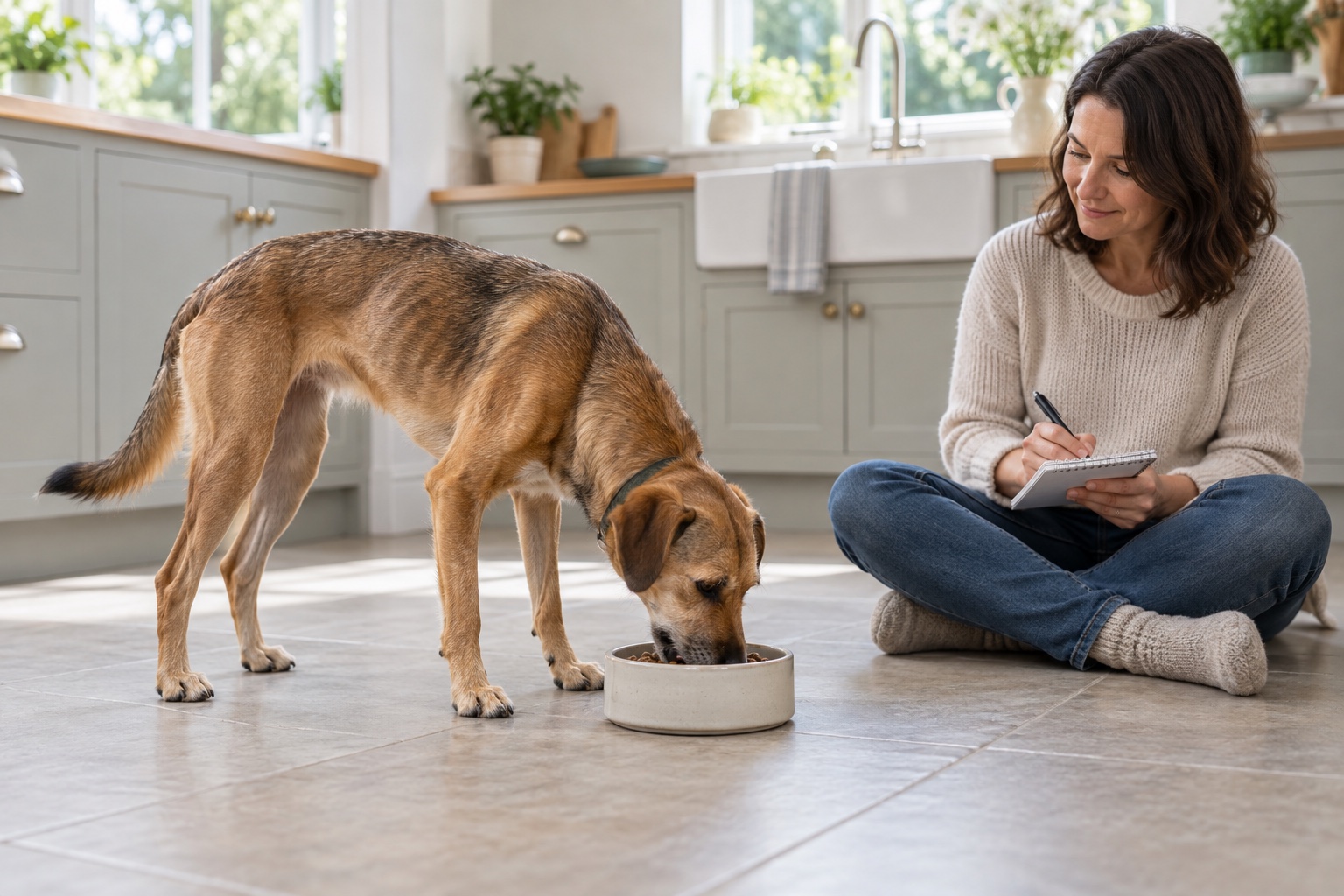
The short answer
Unexplained weight loss deserves a veterinary check—even when your dog is still eating.
Book an appointment with your usual veterinary practice if your dog is becoming noticeably thinner, the number on the scales is falling, or muscle is disappearing from the back, shoulders or hindquarters.
Weight loss with a normal or increased appetite can happen when a dog is not receiving enough usable calories, cannot digest or absorb nutrients properly, loses nutrients through illness, or has a condition that changes how the body uses energy. The pattern alone cannot identify the cause.
Why is my dog losing weight but still eating?
There is no single explanation. Your vet will consider your dog’s age, diet, appetite, stool, thirst, medication, examination and rate of weight loss together. Common possibilities include the following.
Not enough usable calories
The amount in the bowl may not match a dog’s energy needs. Portion errors, a change of food, increased activity, growth, pregnancy, nursing or another pet taking food can all matter. Some dogs visit the bowl eagerly but have dental pain or difficulty chewing and do not eat as much as their owner thinks.
Record the exact food, quantity offered, treats and leftovers. Weighing food in grams is more reliable than estimating with a cup.
Digestive or intestinal disease
Chronic enteropathy and other intestinal disorders can interfere with digestion or absorption. Diarrhoea and vomiting may occur, but they are not always dramatic or present every day. Changes in stool volume, frequency, colour, mucus and urgency can be useful clues.
Some digestive diseases cause protein loss or reduced vitamin B12 absorption. Blood results, faecal tests, response to a carefully controlled diet trial, ultrasound and—where appropriate—biopsies may all contribute to the diagnosis.
MSD Veterinary Manual: Chronic enteropathies in small animals
Exocrine pancreatic insufficiency (EPI)
In EPI, the pancreas does not provide enough digestive enzymes. Dogs may be very hungry yet lose weight because they cannot digest food normally. Large-volume loose stools, frequent defecation, flatulence or a poor coat may also occur.
A specific blood test called trypsin-like immunoreactivity (TLI) is used to diagnose EPI. Vitamin B12 is often measured as well. Signs alone are not enough to confirm it.
MSD Veterinary Manual: Exocrine pancreatic insufficiency
Diabetes mellitus
Diabetes can cause weight loss despite a normal or increased appetite. Increased thirst, larger volumes of urine, recurrent infections, weakness or cataracts may also be noticed.
Diagnosis is based on compatible signs together with persistent high blood glucose and glucose in the urine. A dog that is weak, vomiting, breathing abnormally or refusing food needs urgent assessment.
MSD Veterinary Manual: Diabetes mellitus in dogs and cats
Parasites and other disease
Intestinal parasites can contribute to poor weight gain or weight loss, particularly in younger dogs or those with relevant exposure. Kidney disease, liver disease, Addison’s disease, chronic infection, heart disease and cancer are among the other conditions that may be considered.
This list is not a diagnosis and it is not exhaustive. The important next step is to establish whether your dog is losing fat, muscle or both—and why.
Is my dog losing weight or losing muscle?
Body weight is only one measurement. A body-condition score estimates fat stores, while a muscle-condition score assesses muscle over areas such as the spine, shoulders, skull and pelvis. A dog can lose muscle even when body fat makes the change harder to see.
Look for a more prominent spine or hip bones, narrowing over the shoulders or thighs, a looser collar or harness, or a more obvious waist. Your vet can compare today’s findings with previous weights and recorded body condition.
A fall from 20 kg to 18 kg is a 10% loss. More than 10% of normal body weight is often considered clinically significant, but smaller or continuing unexplained losses also warrant attention—especially when the change is rapid.
WSAVA: Global nutrition guidelines and body-condition resources
What should I record before the appointment?
A short diary can help your vet see the pattern more clearly:
- Current and previous weights, with dates if available
- The exact food, daily quantity, treats and supplements
- Whether appetite is normal, increased, reduced or variable
- Vomiting, regurgitation, diarrhoea or changes in stool
- Changes in thirst, urination, activity or breathing
- Current medication and parasite prevention
- Any difficulty chewing, swallowing or finishing meals
Photographs of food labels, stools or vomit—and short videos of unusual eating or breathing—may be useful. Do not delay an appointment while collecting information if your dog is unwell.
What tests might my vet recommend?
The first step is usually a detailed history and complete examination. Your vet may assess the mouth, heart, lungs, abdomen, lymph nodes, hydration, body condition and muscle condition.
Initial investigations commonly include blood tests and urinalysis. Faecal testing or parasite treatment may be appropriate. Results and examination findings can then guide targeted tests, such as TLI for EPI, vitamin B12, endocrine testing, diagnostic imaging or a structured diet trial.
Your dog does not automatically need every test. A staged investigation should answer the most useful clinical questions first and change as new information becomes available.
VCA: Testing for weight loss in dogs
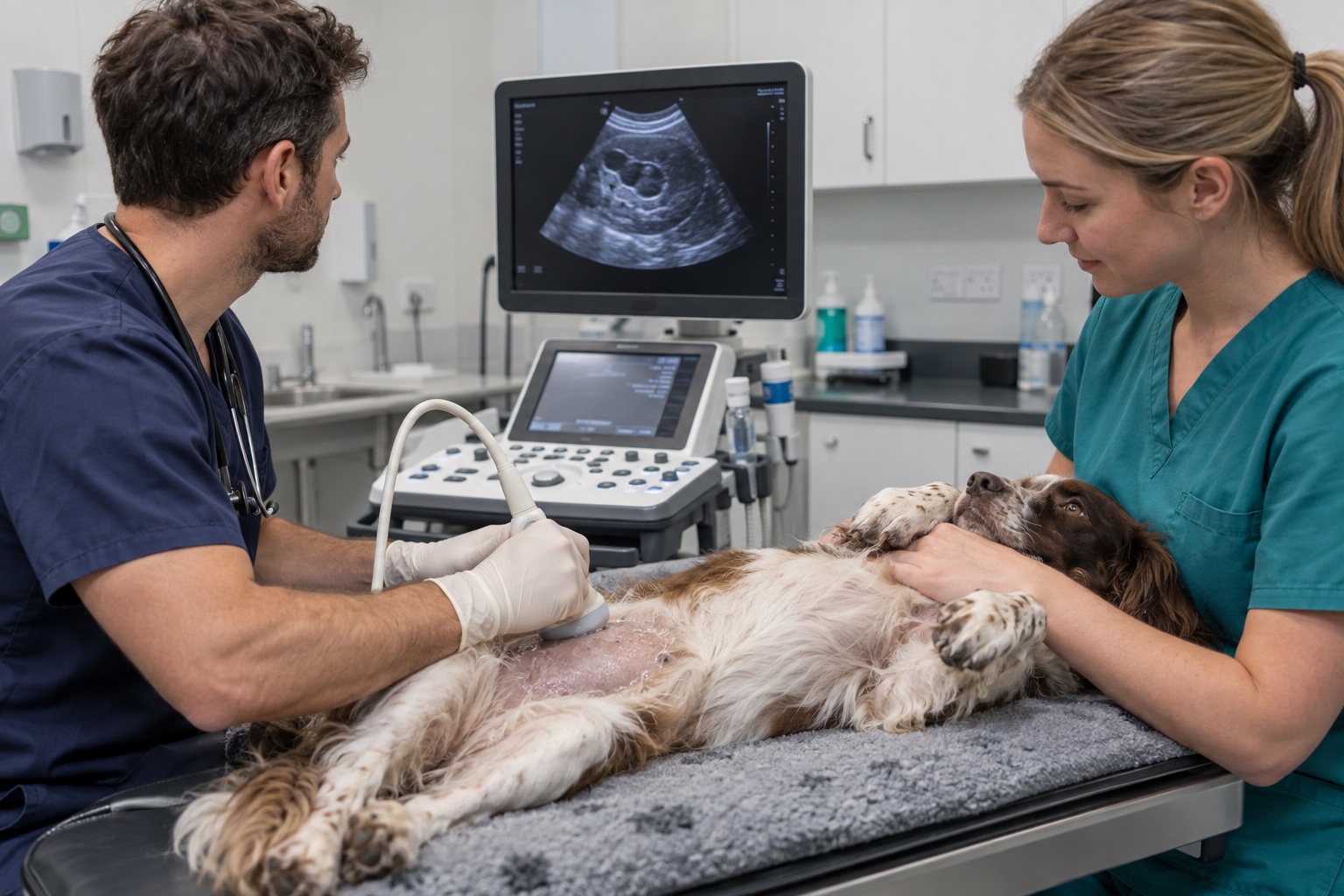
When can abdominal ultrasound help?
Ultrasound can assess the liver, gall bladder, pancreas, kidneys, adrenal glands, gastrointestinal tract, lymph nodes and other abdominal structures. It may identify a change that helps focus further investigation or sampling.
A normal ultrasound does not exclude every microscopic or functional disorder. Equally, an abnormal appearance may not provide a final diagnosis on its own. Findings are interpreted alongside the history, examination and laboratory results.
Available through veterinary referral
A full internal-medicine or digestive work-up, when needed.
For suitable referred dogs, Fabrizio Tucciarone provides postgraduate-qualified internal medicine support and works with the primary veterinary team to investigate unexplained weight loss.
Internal medicine assessment
A structured review brings together the weight trend, diet, clinical history, previous investigations and response to treatment.
Abdominal ultrasonography
Ultrasound can help assess abdominal organs and guide further tests or sampling where clinically appropriate.
Digestive investigation
A full digestive work-up may include targeted blood and faecal tests, a carefully planned diet trial, ultrasound and, in selected cases, endoscopy with biopsies.
Endoscopy is not the first or only test for every dog. It can examine accessible areas of the digestive tract and collect small samples from the lining, but it does not reach every section or sample the full bowel wall. The investigation is chosen for the individual patient.
Appointments are arranged through your usual veterinary practice, with investigations available at selected local referral clinics.
Common questions
Dog weight-loss FAQs
Why is my dog losing weight even though they are eating normally?
A dog can lose weight when calories are not being digested or absorbed properly, when nutrients are being lost, or when illness increases the body’s energy needs. Diabetes, digestive disease, exocrine pancreatic insufficiency, parasites and several other conditions are possible, so an examination and appropriate tests are needed.
Is weight loss more worrying if my dog is always hungry?
A good or increased appetite does not rule out illness. Weight loss with increased hunger can occur with diabetes, exocrine pancreatic insufficiency, intestinal disease or an inadequate calorie intake. Arrange a veterinary appointment rather than simply increasing food indefinitely.
How much weight loss is concerning in a dog?
Any unexplained downward trend deserves attention, especially when it is rapid or accompanied by other signs. A loss of more than 10% of normal body weight is often considered clinically significant, but you do not need to wait for that threshold before speaking to your vet.
What tests might my dog need?
Your vet may begin with a full history, examination, weight and body-condition assessment, blood tests, urinalysis and faecal testing. Depending on the findings, targeted pancreatic or vitamin tests, abdominal ultrasound, a diet trial or endoscopy with biopsies may be recommended.
Can I book directly with Mobile Vet Referral?
Please speak to your usual veterinary practice first. Your vet can arrange referral, share the clinical history and previous results, and coordinate ongoing care with you.
Sources and further reading
- PDSA: Weight loss in dogs
- VCA: Abnormal weight loss in dogs
- VCA: Testing for weight loss in dogs
- MSD Veterinary Manual: Diabetes mellitus in dogs and cats
- MSD Veterinary Manual: Exocrine pancreatic insufficiency
- MSD Veterinary Manual: Chronic enteropathies in small animals
- WSAVA: Global nutrition guidelines and body-condition resources