
The short answer
When should dog diarrhoea be investigated?
Contact your usual veterinary practice if your dog’s diarrhoea lasts more than 24 hours, keeps returning, or your dog seems unwell. Seek advice sooner for a puppy, an older dog, a dog with another medical condition, or if there is blood, vomiting, abdominal pain, reduced appetite, weakness or difficulty staying hydrated.
Diarrhoea is a symptom, not a diagnosis. A veterinary assessment helps distinguish a brief digestive upset from parasites, dietary disease, pancreatic disease, chronic enteropathy or illness outside the intestinal tract.
What does your dog’s diarrhoea look like?
The frequency, volume and appearance of the stool can help your vet decide whether the small intestine, large intestine or both may be involved. Photographs and a simple daily record are often useful.
- Small-intestinal pattern
- Larger volumes of loose stool, often passed at a fairly normal frequency. Weight loss, vomiting, dark digested blood or an unusually large appetite may occur.
- Large-intestinal pattern
- Frequent small amounts, urgency, straining, mucus and sometimes fresh red blood. Dogs may ask to go outside repeatedly or have accidents indoors.
- Mixed pattern
- Some dogs show features of both. The pattern can also change over time, so describe what you see rather than trying to diagnose the location yourself.
Why might a dog keep having diarrhoea?
Possible causes include eating something unusual, a sudden diet change, intestinal parasites, infection, medication effects or stress. Recurrent or persistent diarrhoea can also be associated with food-responsive disease, chronic inflammatory enteropathy, pancreatic insufficiency, pancreatitis, liver disease, Addison’s disease, abnormal intestinal bacteria, protein-losing disease or cancer.
Different conditions can produce similar stools. That is why the history, examination and response to carefully chosen first-line steps are often as important as any single test.
What should I record before seeing my vet?
A concise history can help your veterinary team choose the most useful first tests. Note:
- When the diarrhoea began, how often it occurs and whether it comes and goes
- Stool volume, colour and consistency, including mucus, fresh blood or black stool
- Vomiting, appetite, thirst, urination, energy, abdominal discomfort and weight change
- Your dog’s complete diet, including treats, chews, scavenging and recent changes
- Current medication, supplements, worming history and recent travel
- Exposure to other dogs, contaminated water or household members with gastrointestinal illness
- Previous episodes, tests, dietary trials and response to treatment
Should I take a stool sample?
Yes, if your practice asks for one. Use the sample pot supplied by your vet or a clean, leak-proof container. Avoid contamination with soil, grass or water, label it with your dog’s name and the collection date and time, and deliver it as soon as your practice advises.
Faecal tests may be used to look for parasites, selected infections, blood or evidence of poor digestion. No single test detects every cause, and your vet will decide which analysis is appropriate for your dog.
What may happen at the first veterinary appointment?
Your vet will review the history and diet, assess hydration and body condition, examine the abdomen and look for signs that the problem may involve another body system. Depending on the findings, initial steps may include supportive care, parasite treatment, faecal tests, blood and urine tests or a structured diet trial.
Not every dog needs advanced investigation immediately. A bright adult dog with a brief mild episode is very different from a dog with recurrent signs, weight loss, low blood protein, anaemia, pain or an abnormal abdominal examination.
Available through veterinary referral
A full digestive work-up, coordinated in one clinical pathway.
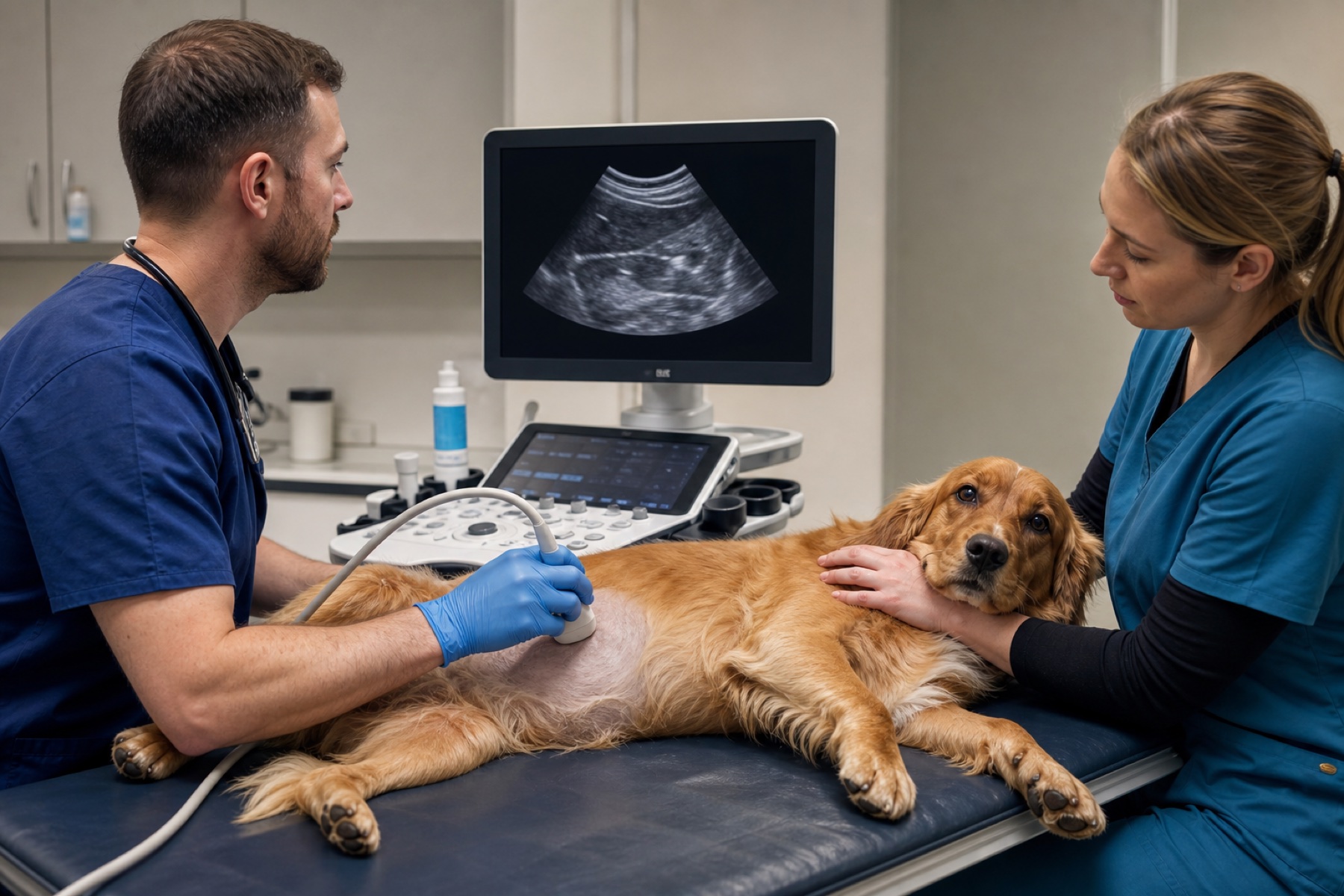
For suitable referred dogs, Fabrizio Tucciarone can provide a full digestive work-up that brings together advanced internal medicine assessment, abdominal ultrasonography, gastrointestinal endoscopy and targeted sampling or biopsy where clinically indicated.
The work-up begins with the clinical question and the investigations already completed by your usual vet. It is then staged around the individual patient, so tests are selected because they are likely to change the diagnosis, treatment or prognosis—not simply because they are available.
Internal medicine assessment
A structured review of the pattern of signs, diet, medication, examination and previous results helps prioritise the most plausible intestinal, pancreatic, hepatic, hormonal or systemic causes.
Explore internal medicineAbdominal ultrasonography
Ultrasound can evaluate intestinal layering and movement, abdominal lymph nodes, pancreas, liver and other organs. It can also help identify focal changes and guide safe sampling when appropriate.
Explore ultrasonographyEndoscopy and biopsy
Gastroduodenoscopy and colonoscopy allow direct examination of accessible digestive mucosa and collection of multiple targeted biopsies when tissue diagnosis is likely to influence management.
Explore endoscopyWhy might a diet trial come before endoscopy?
Some chronic enteropathies improve with a carefully selected diet. In a stable dog, your vet may therefore recommend a strict hydrolysed or novel-protein diet trial before invasive testing. The chosen food must be fed exclusively for the specified period: treats, chews, flavoured medication and food from other pets can invalidate the result.
Endoscopy and biopsy may be considered sooner when there are concerning findings such as significant weight loss, gastrointestinal bleeding, low blood protein, abnormal imaging, a mass, poor appetite or deterioration. The safest sequence depends on the individual dog.
Does my dog need antibiotics?
Usually not. Current guidance indicates that antimicrobials are not needed for most mild or moderate acute diarrhoea cases. Unnecessary antibiotics can disturb the intestinal microbiota and contribute to antimicrobial resistance.
Antibiotics may be appropriate in selected dogs when the examination and test results suggest a bacterial infection or severe systemic illness. Do not use leftover medication or human anti-diarrhoeal products; ask your vet for individual advice.
Common questions
Dog diarrhoea FAQs
When should I contact my vet about my dog’s diarrhoea?
Contact your veterinary practice if the diarrhoea continues for more than 24 hours, keeps returning, or your dog has blood in the stool, vomiting, pain, reduced appetite, lethargy or difficulty staying hydrated. Puppies, older dogs and dogs with another medical condition may need advice sooner.
What counts as chronic diarrhoea in a dog?
Veterinary teams commonly use chronic diarrhoea to describe loose stools that persist or repeatedly return over several weeks. You should not wait several weeks to seek advice: contact your vet earlier if the problem lasts more than 24 hours, recurs, or is accompanied by any other concerning sign.
Should I take a stool sample to the vet?
A fresh stool sample can be useful. Collect it in a clean, sealed container without soil or water contamination, label it with your dog’s name and the collection date and time, and ask your practice how soon they would like it delivered.
Does diarrhoea in dogs always need antibiotics?
No. Many dogs with diarrhoea do not benefit from antibiotics. Treatment depends on the cause and severity, and unnecessary antibiotics can disrupt normal intestinal bacteria and contribute to antimicrobial resistance. Only give medication prescribed for your dog by a veterinary professional.
What tests might be included in a digestive work-up?
The plan is tailored to the individual dog and may include blood and urine tests, faecal testing, assessment of pancreatic or intestinal function, abdominal imaging, a carefully controlled diet trial and, when indicated, endoscopy with biopsies. Not every dog needs every test.
Can I book a digestive work-up directly with Mobile Vet Referral?
No. Pet owners should contact their usual veterinary practice first. If further investigation is appropriate, the primary vet can arrange referral and provide the clinical history, previous results and treatment response.