
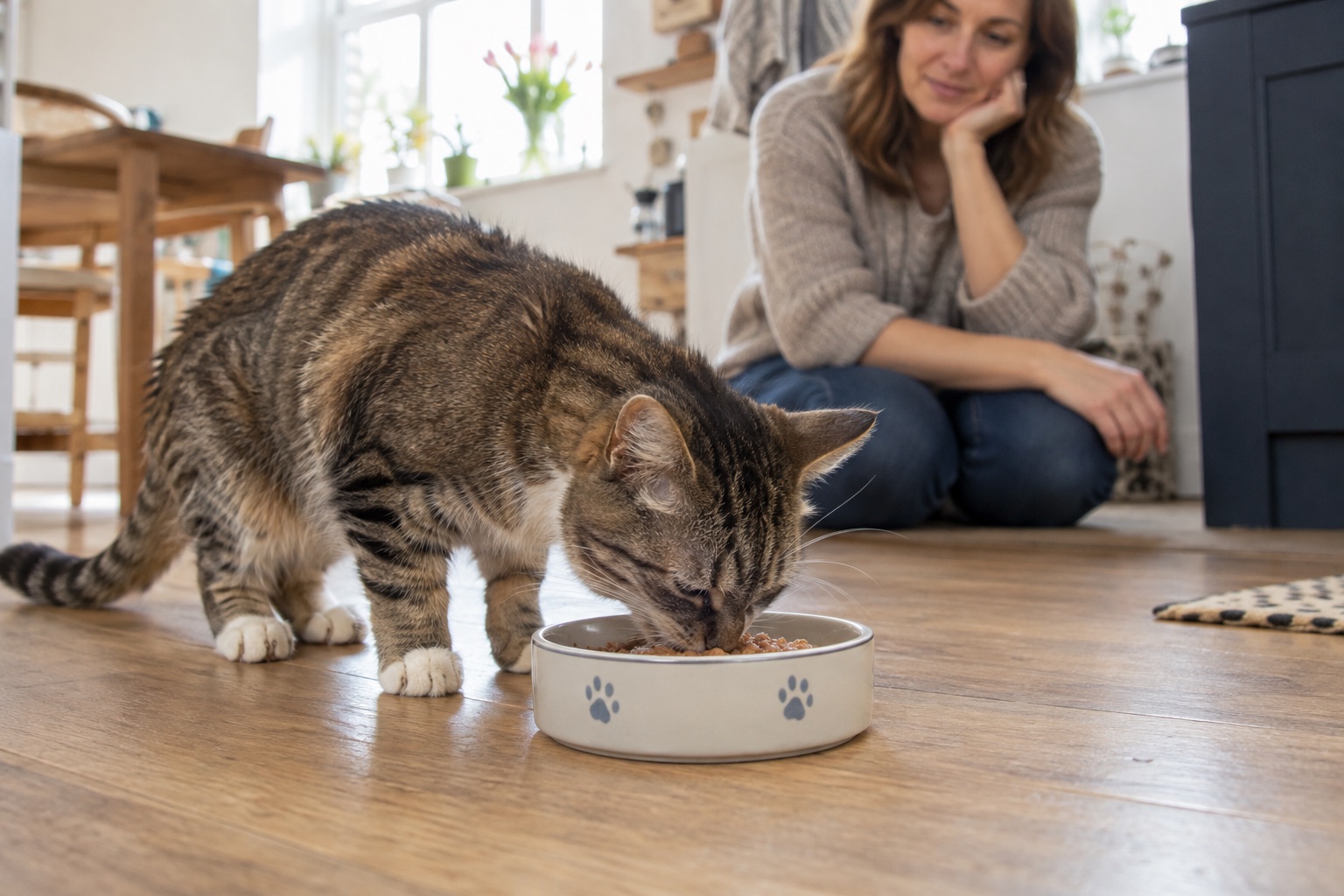
The short answer
Weight loss with a good appetite still needs a check.
If your cat is losing weight despite eating normally—or eating more than usual—book an appointment with your veterinary practice. Possible explanations include an overactive thyroid, diabetes, intestinal disease or an intake of food that is lower than it appears.
The pattern of weight loss, your cat’s appetite and the results of an examination help your vet decide which tests are appropriate. Weight loss should not simply be attributed to old age.
PDSA: Weight loss in catsWhy is my cat losing weight but still eating?
Several conditions can produce similar signs. These are possibilities your vet may consider, rather than diagnoses that can be made from appetite alone.
An overactive thyroid: hyperthyroidism
Hyperthyroidism is an important cause of weight loss in older cats. Excess thyroid hormone speeds up the body’s metabolism, so a cat may become thinner even while eating enthusiastically.
Other signs can include increased thirst, restlessness, more vocalisation, vomiting or an untidy coat. Blood testing usually includes measurement of the thyroid hormone T4. Occasionally, repeat or additional testing is needed when the first result does not explain the clinical signs.
Cornell Feline Health Center: HyperthyroidismDiabetes mellitus
A cat with diabetes may lose weight despite a good or increased appetite because its body cannot use glucose effectively. Owners may also notice more drinking, larger clumps of urine in the litter tray or a change in strength and mobility.
Blood and urine tests help investigate these signs; appetite and thirst alone cannot confirm diabetes.
Cornell Feline Health Center: Feline diabetesIntestinal disease
Conditions affecting the intestines can interfere with digestion and nutrient absorption. Some cats develop vomiting or diarrhoea, while others show more subtle changes.
Chronic intestinal inflammation and intestinal lymphoma can have overlapping signs. Further tests—and sometimes tissue samples—may be needed to distinguish them. Weight loss does not automatically mean cancer.
Cornell Feline Health Center: Inflammatory bowel diseaseChronic kidney disease
Kidney disease can cause weight loss, increased thirst and changes in urination. Appetite may become reduced or variable, although owners do not always recognise the change immediately.
Blood tests and urinalysis are interpreted together to assess kidney function. Blood pressure measurement and further investigations may also be appropriate.
Cornell Feline Health Center: Chronic kidney diseaseEating less than it appears
Visiting the food bowl is not always the same as eating enough. In a household with several cats, it can be difficult to know which cat finishes each meal.
Dental discomfort, stress, competition for food or a change in diet may reduce actual intake. Your vet will therefore ask about the food offered, the amount eaten and how your cat behaves during meals.
PDSA: My cat isn’t eatingIs weight loss normal in older cats?
Age can influence muscle condition and nutritional needs, but noticeable weight loss should trigger a check rather than an assumption that your cat is “just getting old”.
Your vet can compare previous weights and assess both body fat and muscle. This matters because a cat may lose muscle around the spine or hindquarters while still carrying fat elsewhere.
For perspective, a change from 5 kg to 4.5 kg represents a 10% loss of body weight. You do not need to wait for that amount of loss before seeking advice: a smaller, persistent downward trend also deserves attention.
Evaluating ageing in cats: How to determine what is healthy and what is diseaseWhat should I record before the appointment?
A few observations can make the consultation more useful:
- Previous weights and when you first noticed a change
- The exact food, quantities offered and leftovers
- Whether appetite is normal, increased, reduced or variable
- Changes in drinking and litter-tray use
- Vomiting, diarrhoea or changes in stool appearance
- Activity, grooming, hiding, vocalisation or difficulty eating
- Medication, supplements and parasite prevention
If practical, feed cats separately for a short period so you can observe individual intake. Bring food packaging or photographs of the labels.
What tests might my vet recommend?
The investigation begins with the history and a physical examination. Your vet may check the mouth, thyroid region, heart, abdomen, hydration, body condition and muscle condition.
Initial tests may include blood tests, a thyroid hormone measurement and urinalysis. Further tests are selected according to the findings—for example, faecal testing, vitamin B12 measurement or abdominal imaging.
Your cat does not necessarily need every test. The aim is to build a clear explanation of the weight loss and choose investigations that can guide treatment.
Cornell: Internal medicine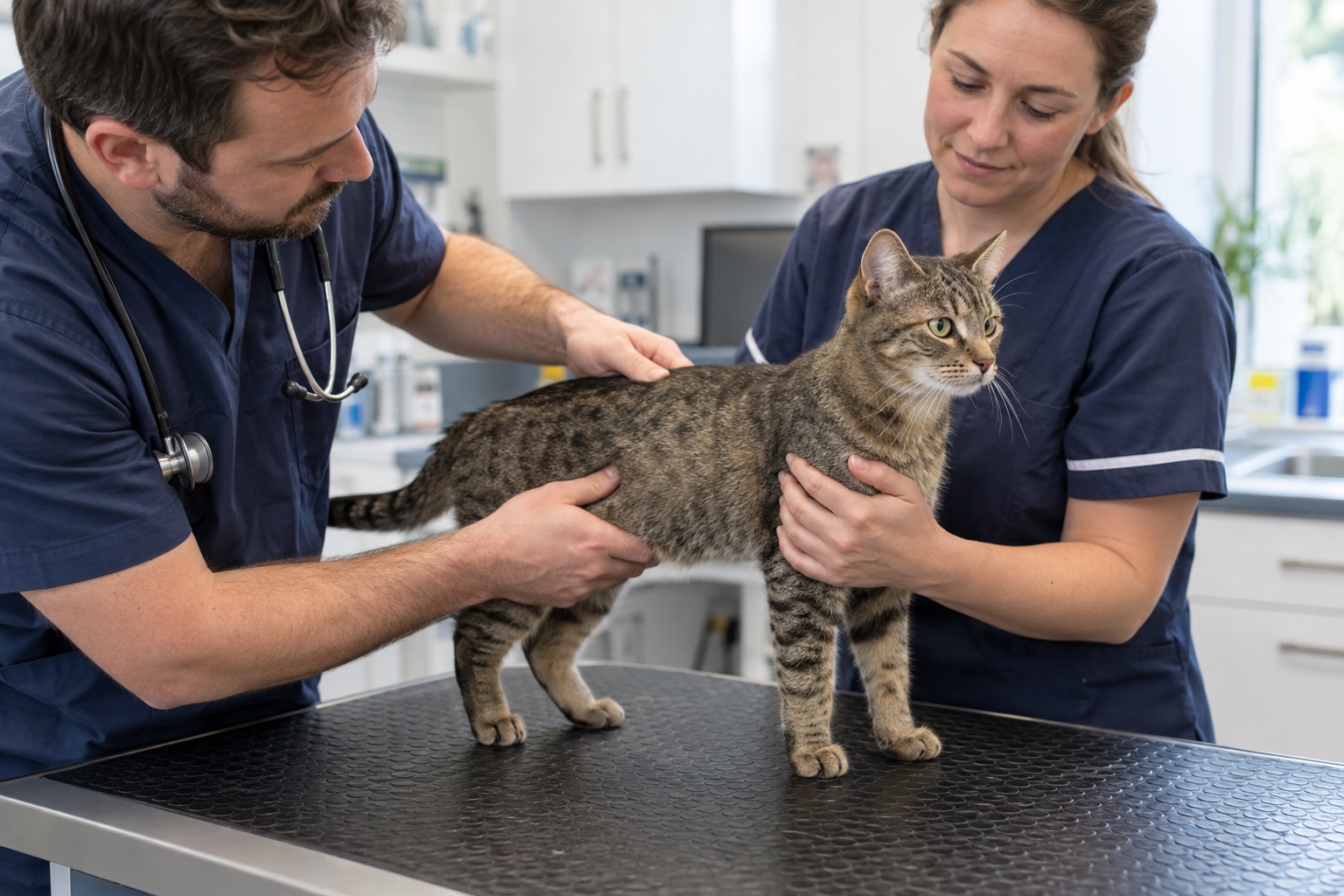
What if the first blood tests are normal?
Normal initial results are useful, but they do not explain continuing weight loss on their own.
Your vet may recommend reviewing the weight trend, measuring actual food intake, repeating selected tests or investigating the digestive tract. The next step depends on what was tested, the examination findings and whether the weight loss is continuing.
Abdominal ultrasound can be useful in selected cats with unexplained weight loss.
Royal Canin Academy: Unexplained weight loss in the catAvailable through veterinary referral
A fuller picture of your cat’s health.
For suitable referred cats, Fabrizio Tucciarone can provide advanced internal medicine support and coordinate further investigation of unexplained weight loss.
Internal medicine assessment
A structured review brings together your cat’s history, previous results, diet and response to treatment.
Explore internal medicineAbdominal ultrasonography
Ultrasound can help assess organs such as the intestines, liver, pancreas, kidneys and abdominal lymph nodes. Findings may guide further testing or sampling, where appropriate.
Explore ultrasonographyA full digestive work-up
When digestive disease is suspected, a full digestive work-up can include targeted laboratory tests, ultrasound and, in selected cases, endoscopy with biopsies.
Explore endoscopyEndoscopy allows examination of accessible parts of the digestive tract and collection of small samples from the lining. It does not reach every part of the intestine or sample every layer, so the most appropriate sampling method is chosen for the individual cat.
Cornell Feline Health Center: Inflammatory bowel diseaseAppointments are arranged through your usual veterinary practice, with investigations available at selected local referral clinics.
Common questions
Cat weight loss FAQs
My cat is always hungry but losing weight. Is that definitely a thyroid problem?
No. Hyperthyroidism is one possibility, but diabetes and digestive problems can produce a similar pattern. An examination and appropriate tests are needed to identify the cause.
Can my cat have intestinal disease without diarrhoea?
Yes. Cats with intestinal disease may show weight loss or vomiting without obvious diarrhoea. Tell your vet about occasional vomiting as well as changes in stools.
Should I just give my cat more food?
Your vet may recommend adjusting food intake, but increasing portions alone may not address the cause. Record how much your cat actually eats and arrange an assessment if weight loss is unexplained.
Does my cat need an ultrasound immediately?
Not necessarily. The timing depends on the examination, initial results and severity of the weight loss. Ultrasound may be particularly useful when weight loss persists or abdominal disease is suspected.
Can I book directly with Mobile Vet Referral?
Please speak to your usual veterinary practice first. Your vet can arrange referral and share the clinical history and previous results.
Sources and further reading
- PDSA: Weight loss in cats
- PDSA: My cat isn’t eating
- Cornell Feline Health Center: Hyperthyroidism
- Cornell Feline Health Center: Feline diabetes
- Cornell Feline Health Center: Inflammatory bowel disease
- Cornell Feline Health Center: Chronic kidney disease
- Evaluating ageing in cats: How to determine what is healthy and what is disease
- Cornell: Internal medicine
- Royal Canin Academy: Unexplained weight loss in the cat