
The short answer
Contact your vet if the increase is persistent or unexplained.
Book an appointment if your cat is drinking more than usual, emptying bowls faster, seeking water from new places, passing larger amounts of urine or producing much wetter litter. Increased thirst and increased urine production often occur together and can be early signs of kidney disease, diabetes, hyperthyroidism or another medical problem.
Do not restrict water. If your cat is repeatedly straining but producing little or no urine, treat this as a different and potentially life-threatening problem: contact a veterinary practice immediately.
Is your cat producing more urine—or trying to urinate more often?
These patterns may look similar because both can lead to more litter-tray visits, but they suggest different clinical questions.
- Larger urine volumes
- Bigger clumps of litter, much wetter litter, larger puddles or a tray that needs changing more often can indicate increased urine production, also called polyuria.
- Frequent small attempts
- Repeated visits, squatting, straining, blood, vocalising or passing tiny amounts are more suggestive of lower urinary tract pain or obstruction.
- Urinating outside the tray
- This can occur with either pattern. Urinary discomfort, increased volume, mobility problems, stress, tray preferences and other medical causes all need consideration.
If you are unsure how much urine is being passed, telephone your veterinary practice and describe exactly what you can see. A short video of litter-tray behaviour may help, but never delay emergency care to make one.
How can I tell whether my cat is drinking more?
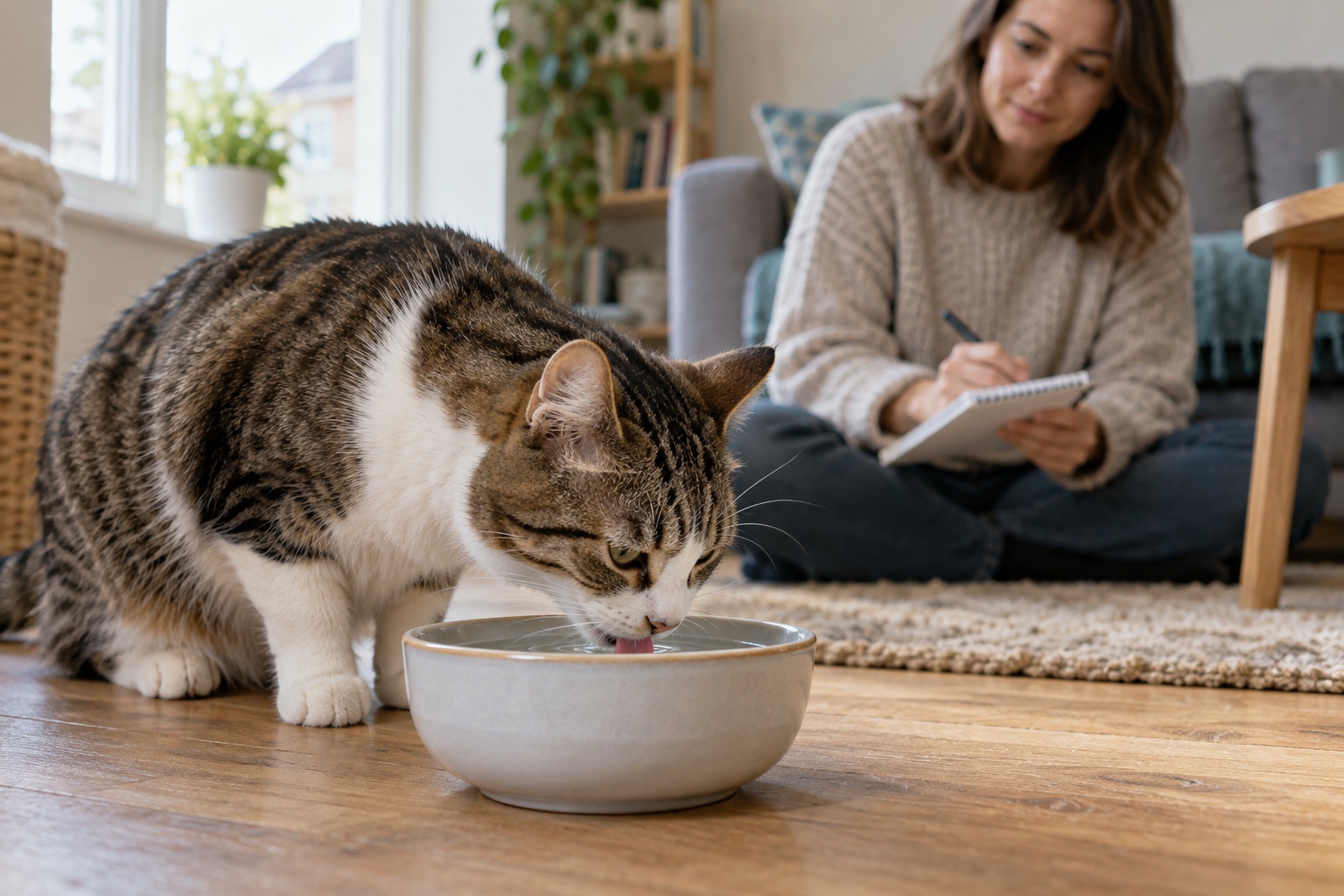
Cats eating wet food may obtain much of their water from meals, so owners do not always see them drink. A change can be easier to recognise than an absolute total. Look for bowls emptying faster, longer visits to a bowl or fountain, drinking from taps or sinks, and larger or more numerous urine clumps.
If your vet asks you to measure intake, fill bowls with a known amount, record everything added and measure what remains after 24 hours. Include fountains and other accessible water sources. In a multi-cat home, the total may not show which cat is drinking; tell your vet if an accurate individual measurement is not practical.
Keep fresh water available throughout. Never perform a water-deprivation test at home.
Why might a cat drink and urinate more?
Increased thirst and urine production are signs, not a diagnosis. Common possibilities include:
Kidney disease
Kidneys that cannot concentrate urine normally allow more water to be lost. Increased thirst and urination may appear before a cat looks obviously unwell; reduced appetite, weight loss, nausea or poor coat condition may develop too.
Diabetes mellitus
Glucose entering the urine draws water with it, increasing urine volume and thirst. Weight loss despite a normal or increased appetite is a common accompanying pattern.
Hyperthyroidism
An overactive thyroid is more common in older cats and can cause weight loss, increased appetite, restlessness, vomiting, diarrhoea, a fast heart rate and increased thirst or urination.
Other causes
Liver disease, high blood calcium, fever, some urinary infections and medication such as corticosteroids can contribute. An infected womb is an important possibility in an unneutered female cat.
Diet, warmer weather and changes in water presentation can alter visible bowl drinking, but they should not be used to explain a persistent change without considering your cat’s health as a whole.
Cats Protection: Kidney disease in cats Cornell Feline Health Center: Feline diabetes Cats Protection: Hyperthyroidism in cats
What should I record before the appointment?
A simple diary can help your vet choose the most informative first tests. Record:
- When the change began and whether it is stable, intermittent or worsening
- Any measured water intake and every water source available
- Whether litter clumps are larger, visits are more frequent, or straining occurs
- Appetite, recent weight, activity, vomiting, diarrhoea and coat condition
- Whether your cat eats mainly wet food, dry food or a mixture
- All medication and supplements, including any recent steroid treatment
- Changes in mobility, access to litter trays or behaviour in a multi-cat home
Ask whether the practice would like a fresh urine sample and how to collect and store it. Do not delay an urgent examination while attempting to obtain one.
What tests might my vet recommend?
The first step is a detailed history and physical examination, including body weight and muscle condition. Your vet may assess hydration, feel the abdomen and thyroid region, listen to the heart, and measure blood pressure where appropriate.
Urinalysis can assess how concentrated the urine is and look for glucose, ketones, protein, blood, inflammation and other changes. A urine culture may be recommended when infection is possible. Blood tests can assess kidney and liver values, glucose, electrolytes, calcium, blood cells and thyroid hormone according to the individual cat.
Results need to be interpreted together. For example, dilute urine does not identify one disease on its own, and cats can have more than one condition at the same time.
When can abdominal ultrasound help?
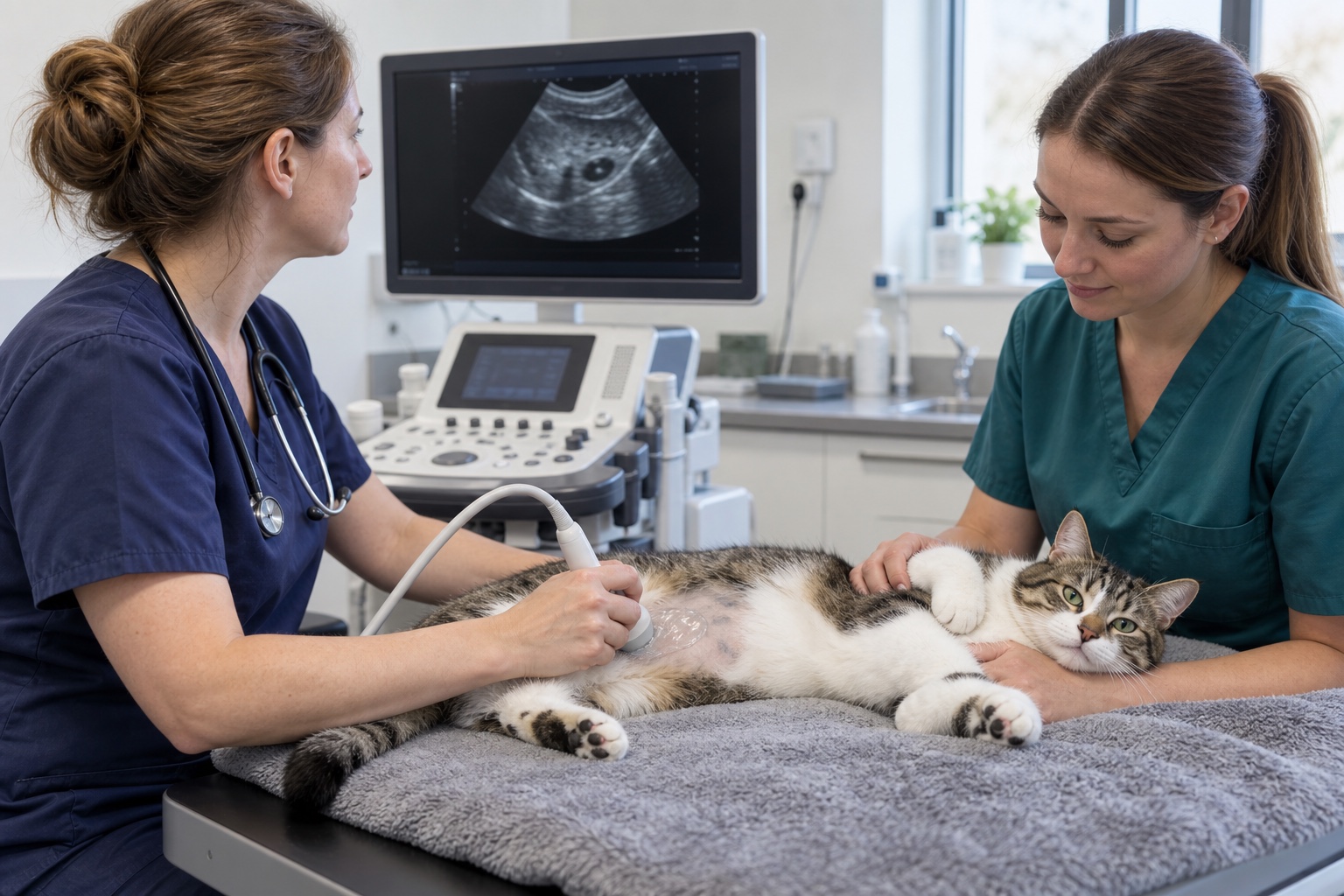
Ultrasound may be recommended when examination, blood or urine results raise a structural question. It can help assess the kidneys, ureters, bladder, liver, adrenal glands, abdominal lymph nodes and other organs. It may also guide carefully selected sampling.
An ultrasound scan does not replace urinalysis, blood tests or clinical interpretation, and not every cat with increased thirst needs one. Its value is greatest when there is a clear question that imaging can help answer.
Available through veterinary referral
A coordinated renal, endocrine and abdominal work-up.
For suitable referred cats, Fabrizio Tucciarone provides postgraduate-qualified internal medicine support. The clinical history, examination and results already obtained by the primary vet are reviewed before further tests are prioritised.
Nephrology and urinary medicine
Urine findings, kidney markers, blood pressure and imaging can be interpreted together when renal disease, protein loss, infection or another urinary disorder is suspected.
Endocrine and metabolic investigation
Thyroid disease, diabetes and other metabolic causes are investigated in a logical sequence based on the cat’s signs and first-line results.
Abdominal ultrasonography
Imaging can evaluate relevant organs and guide selected sampling where this is safe, appropriate and likely to affect the diagnostic plan.
Appointments are arranged through your usual veterinary practice and take place at selected local referral clinics.
Is drinking more just part of getting older?
No. Older cats are more likely to develop kidney disease, hyperthyroidism and diabetes, but increased thirst is not a normal ageing change to ignore. Early assessment can identify manageable disease before the cat becomes obviously unwell.
Tell your vet about subtle accompanying changes such as weight loss, a stronger appetite, reduced grooming, restlessness, vomiting or a different litter-tray routine.
Common questions
Cat drinking and urinating more FAQs
Why is my cat suddenly drinking more water?
A new increase in thirst may occur with kidney disease, diabetes mellitus, hyperthyroidism, medication or several other conditions. Diet and warm weather can also affect visible bowl drinking, but a persistent or unexplained change should be discussed with your vet.
Is it normal for an older cat to drink and urinate more?
No. Kidney disease, hyperthyroidism and diabetes become more common with age, but increased thirst or urine production should not simply be accepted as normal ageing. Early assessment may identify a condition while your cat still appears well.
How much water is too much for a cat?
There is no single bowl measurement that is normal for every cat. Wet food, weather, activity and access to several water sources all affect visible intake. A clear change from your cat’s usual pattern is important. Your vet may ask for a carefully measured 24-hour total where this is practical.
Should I restrict my cat’s water if they are drinking too much?
No. Keep fresh water freely available unless a veterinarian gives a specific instruction. A cat may be drinking to replace fluid lost through increased urination, and restricting water can be dangerous.
Is a male cat repeatedly visiting the litter tray an emergency?
It can be. Repeated straining, crying or producing little or no urine may indicate urethral obstruction, which is life-threatening and particularly important in male cats. Contact a veterinary practice immediately.
What tests might my cat need for increased thirst and urination?
A veterinary assessment commonly begins with a history, examination, urinalysis and blood tests. Blood pressure, urine culture, urine protein measurement, thyroid testing or abdominal imaging may be added according to the findings.
Can I book this investigation directly with Mobile Vet Referral?
Please contact your usual veterinary practice first. If a fuller renal, endocrine, internal-medicine or ultrasound investigation is appropriate, your primary vet can arrange referral and provide the clinical history and previous results.