
The short answer
Fast breathing at rest is not something to ignore.
Count again when your cat is quietly asleep and not dreaming. If the rate remains clearly faster than usual, repeatedly reaches the upper end of the normal range, or is accompanied by any change in effort, contact your veterinary practice.
Do not wait to count if your cat is breathing with an open mouth, using the abdomen forcefully, stretching the neck to breathe, unable to settle, weak or collapsed. Those signs require immediate veterinary care.
What does fast or difficult breathing look like in a cat?
Speed and effort are different. A cat can breathe quickly without obvious effort, or work very hard to breathe without an extremely high measured rate.
- Fast breathing
- An increased number of breaths per minute, often shallow. The mouth may remain closed.
- Laboured breathing
- Increased effort, including pronounced chest or abdominal movement, nostril flaring, an extended neck or difficulty finding a comfortable position.
- Open-mouth breathing
- Panting or breathing through the mouth is abnormal in a resting cat and should be treated as an emergency.
- Asynchronous breathing
- The chest and abdomen appear to move in opposite directions. This can occur with serious disease affecting the chest and requires urgent assessment.
Do not handle your cat repeatedly to inspect the gums or listen to the chest if breathing already looks difficult. Stress can make respiratory distress worse.
Royal Veterinary College: Respiratory distress in cats and dogs
How do I count my cat’s resting breathing rate?
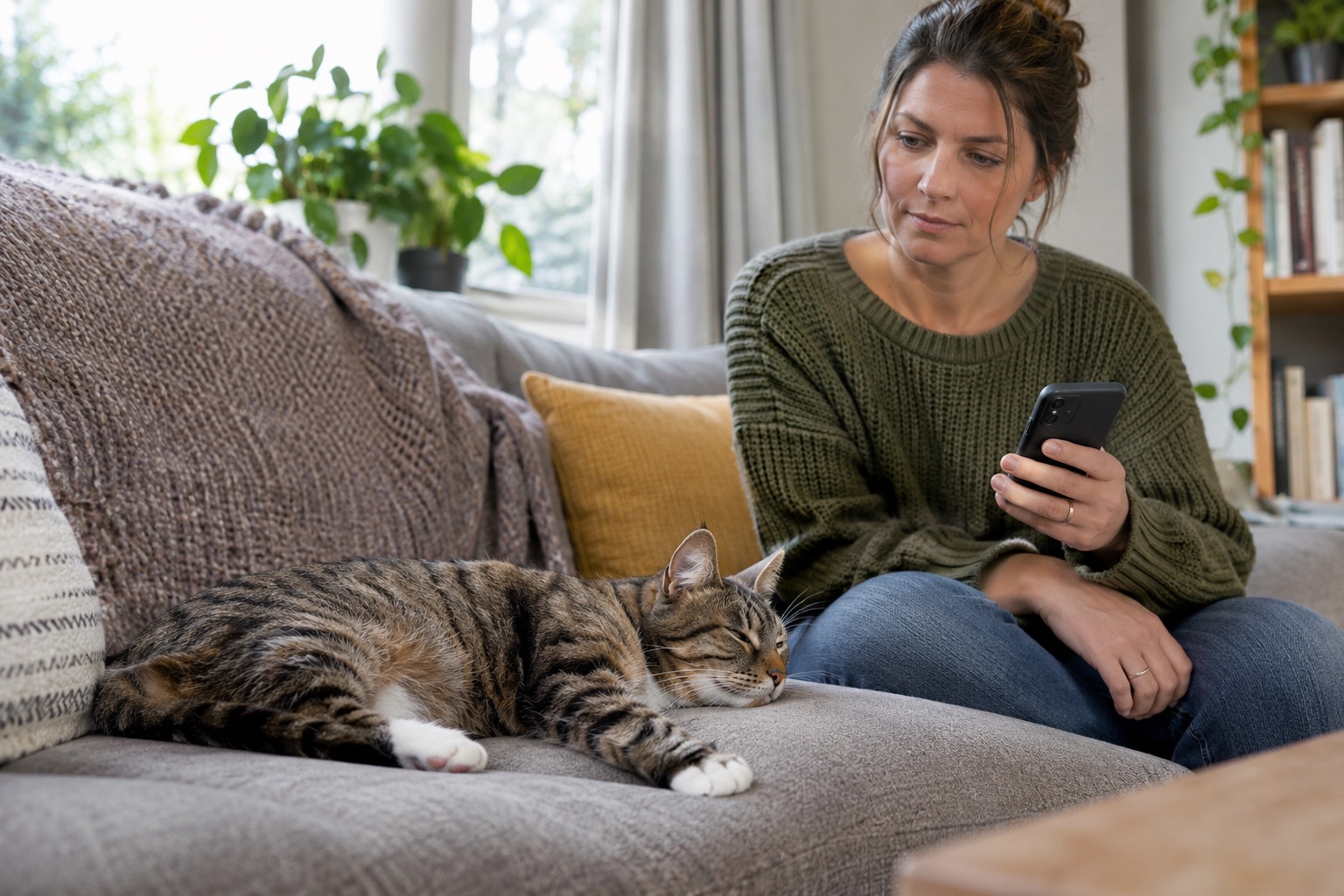
- Wait until your cat is asleep or fully relaxed—not purring, grooming or dreaming
- Observe from a distance so your cat does not become alert
- Watch the chest: one rise and fall equals one breath
- Count for 15 seconds and multiply by four, or count for a full minute
- Write down the result, time and whether anything unusual was happening
- Repeat when your cat is settled if the first count seems unexpectedly high
PDSA describes 16–40 breaths per minute as a normal resting range for cats. The whole picture matters: a repeated change from your cat’s usual rate, a consistently high result or any additional effort warrants veterinary advice. A cat in obvious distress needs help regardless of the number.
Purring, dreaming, heat, recent play and anxiety can all produce a misleading count.
My cat is breathing fast but acting normal—should I still call the vet?
Yes, if the change is persistent, recurrent or unexplained. Cats often conceal illness and can continue eating, grooming or interacting during the early stages of heart, lung or systemic disease.
Record a short video only if it is safe, note the resting rate and telephone your practice. Your veterinary team can decide whether your cat needs immediate assessment, an appointment the same day or monitoring based on the pattern and any other signs.
Contact the practice sooner if your cat is older, has known heart or respiratory disease, recently experienced trauma, or has reduced appetite, weight loss, coughing, hiding, weakness or pale gums.
Why might a cat breathe quickly at rest?
Fast breathing is a clinical sign rather than a diagnosis. Your vet will interpret it alongside effort, heart and lung sounds, temperature, gum colour, history and other changes at home.
Stress, heat, pain or fever
Travel, handling, a hot room, pain and fever can temporarily raise the breathing rate. It should settle when the trigger resolves. Persistent fast breathing after your cat has rested in a calm, cool environment still requires advice.
Feline asthma or chronic airway disease
Asthma can cause coughing, wheezing and increased breathing rate or effort. Cats may crouch low with the neck extended during an episode. Infection, lungworm and heart disease can produce similar signs, so appearance alone cannot confirm asthma.
Cats Protection: Feline asthma
Heart disease or heart failure
Some cats with heart disease have no obvious signs until fluid accumulates in or around the lungs. Fast or laboured breathing, reduced energy, collapse and difficulty lying comfortably can occur. A heart murmur may be absent, and a murmur does not by itself prove that the breathing problem is cardiac.
Cats Protection: Heart disease and heart failure in cats
Fluid or air around the lungs
Pleural effusion and pneumothorax restrict the lungs from outside and can cause rapid, shallow or laboured breathing. Possible causes include heart disease, infection, trauma and other chest disorders. Drainage may be required urgently in some patients.
MSD Veterinary Manual: Disorders of the chest cavity of cats
Lung infection or inflammation
Pneumonia and other diseases of the lung tissue can increase the rate and effort of breathing. Fever, lethargy, reduced appetite, cough or nasal discharge may be present, but not every cat shows every sign.
Anaemia or disease elsewhere in the body
Anaemia reduces the blood’s ability to carry oxygen. Pain, fever, metabolic disease and some toxins can also change breathing. Pale gums, weakness, appetite change, weight loss or altered thirst can help direct the initial tests.
What should I record for my vet?
- The resting or sleeping rate and whether it is repeatedly different from normal
- Whether the mouth is open or closed and whether the abdomen is working hard
- When the change began and whether it is constant or episodic
- Coughing, wheezing, sneezing, nasal discharge or a changed voice
- Appetite, thirst, urination, activity, hiding and recent weight change
- Recent trauma, travel, heat exposure or contact with other cats
- All medicines, inhalers and supplements, including recent changes
A short video from a distance can help when the episode is intermittent. Stop recording and seek urgent help if breathing effort increases.
What might happen at the veterinary practice?
The team may observe your cat before handling because restraint and stress can worsen breathing. If your cat is unstable, oxygen, calm hospitalisation or emergency treatment may take priority over a full examination and diagnostic tests.
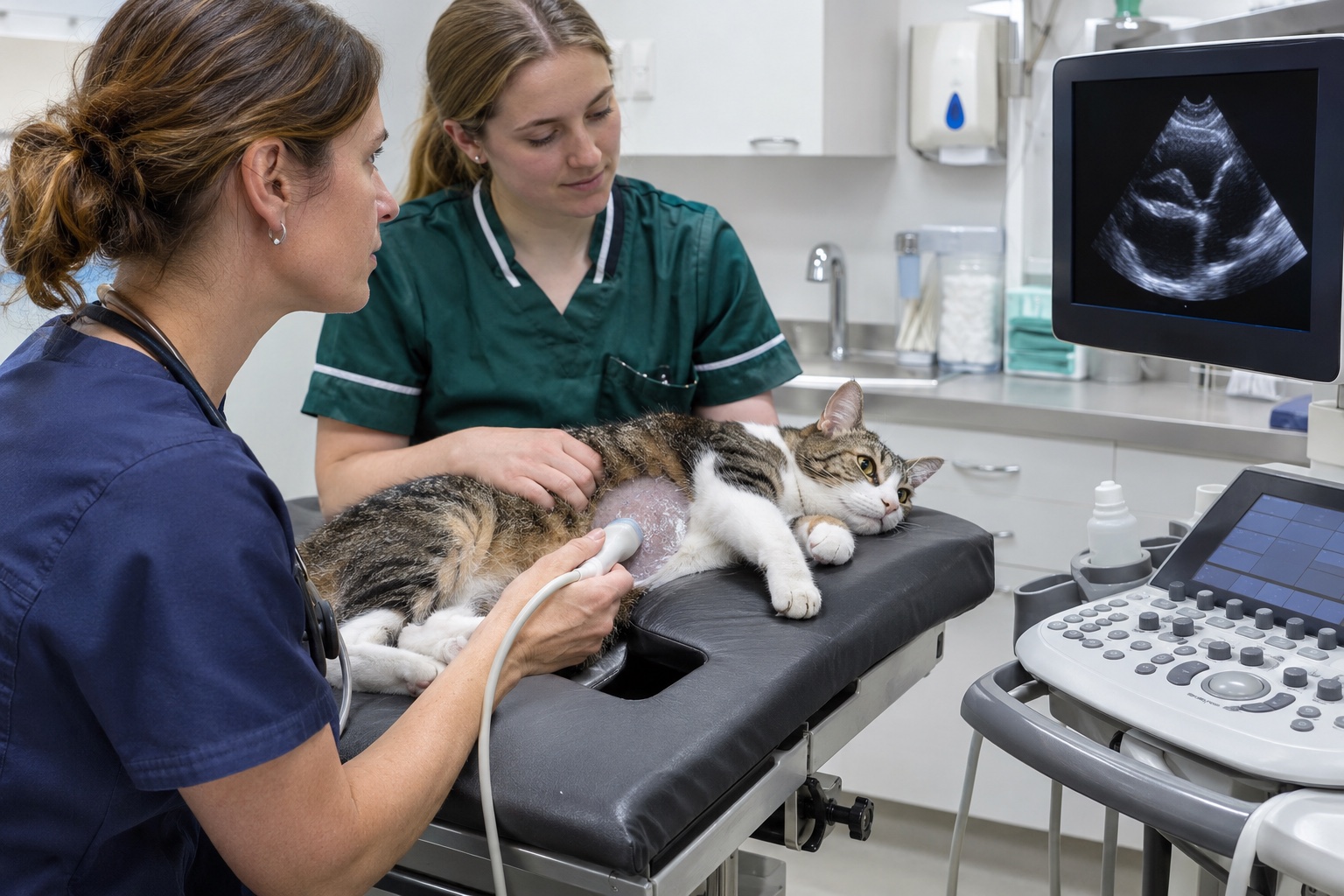
Once it is safe, your vet may assess temperature, gum colour, heart and lung sounds, pulse quality and hydration. Blood tests can help identify anaemia, infection or systemic illness. Chest radiographs, thoracic ultrasound and echocardiography answer different questions and are selected according to the examination and patient stability.
Bronchoscopy and airway sampling are not first-aid procedures and require general anaesthesia. They are reserved for suitable stable cats when airway disease remains a concern and the result is likely to change treatment.
Royal Veterinary College: Respiratory distress in cats and dogs
Available through veterinary referral
A staged cardiopulmonary investigation for suitable stable cats.
For cats referred by their usual veterinary practice, Fabrizio Tucciarone provides postgraduate-qualified internal-medicine, imaging and respiratory support. The safest and most useful next step is chosen from the clinical question and the tests already completed.
Internal-medicine assessment
History, examination, medication, laboratory results and previous imaging are reviewed together to prioritise cardiac, respiratory and systemic causes.
Echocardiography and thoracic ultrasound
Echocardiography evaluates heart structure and function. Thoracic ultrasound can identify pleural fluid and assess selected peripheral chest abnormalities, but it does not replace every view provided by radiographs.
Bronchoscopy and airway sampling
For selected stable patients, bronchoscopy can examine the trachea and bronchi and permit airway samples when asthma, infection or another airway disorder remains a concern.
Respiratory distress always takes priority over referral diagnostics. Urgent or unstable cats should be stabilised through the primary or emergency practice first.
Common questions
Cat breathing FAQs
What is a normal resting breathing rate for a cat?
PDSA gives a normal resting range of 16 to 40 breaths per minute. However, one number should not be used in isolation. Count when your cat is asleep or completely relaxed, learn their usual pattern and contact your vet about a repeated increase or any additional breathing effort.
Why is my cat breathing fast while sleeping?
Dreaming can briefly speed up or make breathing irregular, so count again when your cat is sleeping quietly and not twitching. A consistently raised sleeping rate can occur with heart or lung disease, pain, fever, anaemia and other conditions and should be discussed with your vet.
My cat is breathing fast but acting normal—should I worry?
Cats can conceal illness and may appear relatively normal early in a problem. If fast breathing is new, persists at rest or keeps returning, contact your veterinary practice even if your cat is still eating and interacting normally.
Is open-mouth breathing normal in cats?
No. Unlike dogs, cats do not normally pant. Open-mouth breathing at rest, gasping or obvious breathing effort should be treated as an emergency. Keep handling to a minimum and contact your vet or its out-of-hours provider immediately.
Can purring affect my cat’s breathing count?
Yes. Purring can make chest movement and respiratory sounds harder to interpret. Wait until your cat is quietly asleep or fully relaxed without purring, then count again without disturbing them.
Can feline asthma cause fast breathing?
Yes. Asthma and chronic bronchial disease can cause coughing, wheezing and an increased rate or effort of breathing. Similar signs can occur with infection, heart disease, parasites and other disorders, so diagnosis requires veterinary assessment rather than a trial of human inhalers.
What tests might be needed for a cat breathing fast?
The safest sequence depends on your cat’s stability. After examination and any necessary oxygen or stabilisation, tests may include blood tests, chest radiographs, thoracic ultrasound, echocardiography or selected airway investigations. An unstable cat should not be stressed by non-essential tests.
Can I book a breathing investigation directly with Mobile Vet Referral?
Please contact your usual veterinary practice first. Breathing difficulty can be an emergency, and your vet can assess and stabilise your cat before arranging referral if further internal-medicine, cardiac, imaging or respiratory investigation would help.