
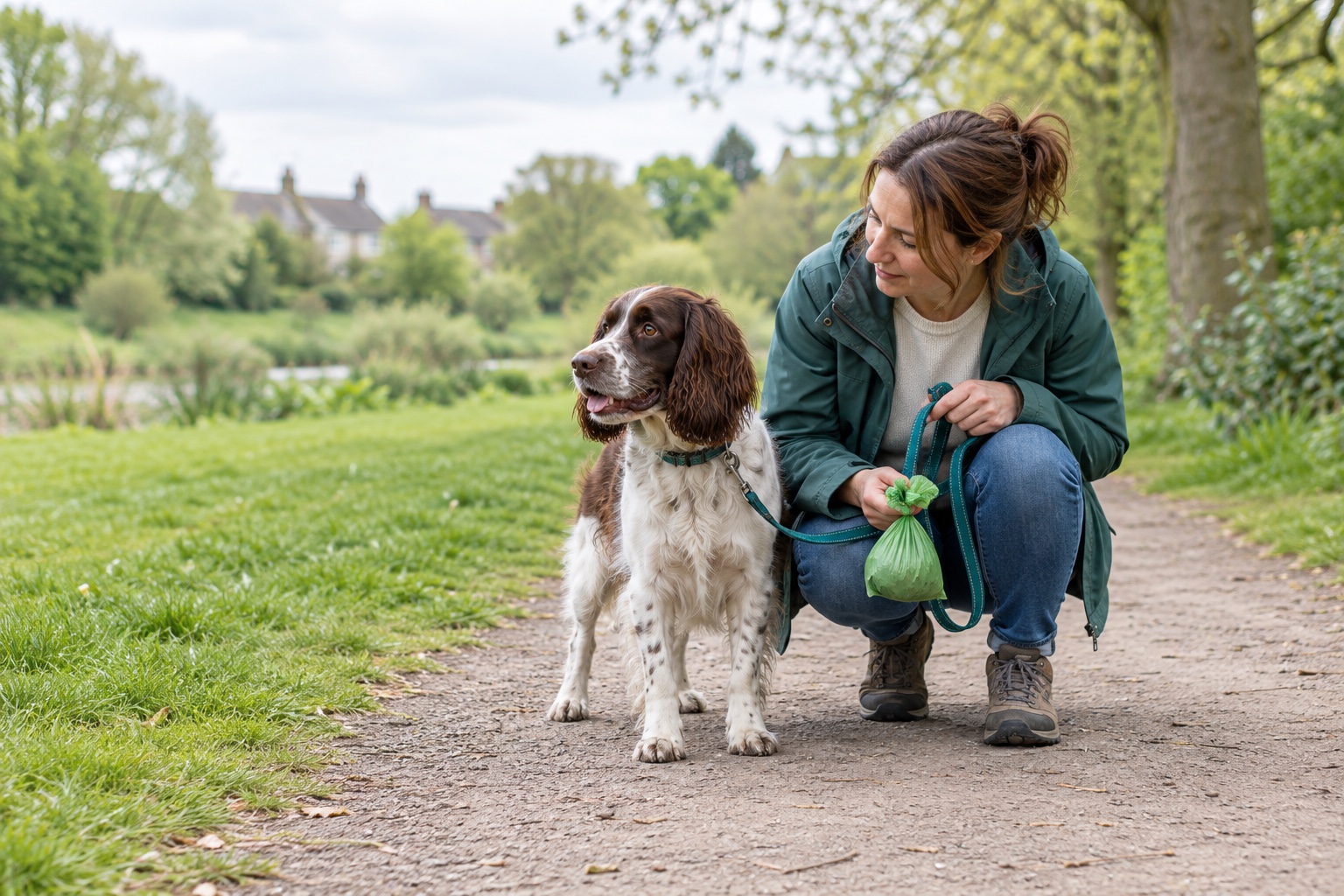
The short answer
Contact your vet if you find blood in your dog’s poo—even if your dog seems well.
A small amount of fresh, bright-red blood can come from irritation or straining near the end of the bowel and is not always an emergency. Black, sticky or tar-like poo can represent digested blood from higher in the digestive tract and requires prompt veterinary advice.
The amount of blood matters, but your dog’s overall condition matters more. Repeated bleeding, vomiting, pain, weakness, pale gums, collapse or a puppy with bloody diarrhoea should never be managed by waiting for a referral appointment.
What does blood in a dog’s poo look like?
Blood can appear very different depending on where it enters the digestive tract and how long it has been present. Colour is a useful clue, but it cannot diagnose the cause on its own.
- Bright-red streaks or drops
- Fresh red blood is often described as haematochezia. It commonly comes from the colon, rectum or anal area and may sit on the outside of otherwise formed stool.
- Red blood with mucus or “jelly”
- Fresh blood mixed with slime is commonly associated with large-bowel inflammation. Dogs may pass small amounts frequently, strain or need to go urgently.
- Black, sticky or tar-like poo
- Melena is digested blood and can indicate bleeding from the stomach or upper small intestine. It may look very dark, shiny and sticky rather than simply dark brown.
- Blood with watery diarrhoea
- This can cause rapid fluid loss. The urgency depends on the amount, frequency and whether your dog is vomiting, painful, weak or becoming dehydrated.
My dog has blood in their poo but is acting normally—should I worry?
A single small streak after straining may have a minor explanation, but it is sensible to telephone your veterinary practice for advice. Monitor your dog closely and note whether the next bowel movement is normal.
Arrange an examination if the blood happens again, increases, is mixed through diarrhoea, or is accompanied by mucus, straining, appetite change or weight loss. Some dogs can appear relatively well early in an illness, and puppies, elderly dogs and dogs with existing disease deserve extra caution.
Why might there be blood in my dog’s stool?
There are many possible causes. Your vet will use the history, examination and pattern of signs to decide which are plausible rather than assuming from colour alone.
Large-bowel inflammation or colitis
Colitis often causes frequent small stools, urgency, straining, mucus and fresh red blood. It may follow dietary change, scavenging, stress, infection or parasites, while recurrent cases can require a more structured investigation.
Dietary indiscretion, infection or parasites
Eating spoiled food, abrupt diet changes, parasites and some infections can inflame the digestive tract. Puppies with bloody diarrhoea require particular caution because infections such as parvovirus can become serious quickly.
Constipation, rectal irritation or anal disease
Straining to pass a hard stool can leave a small amount of fresh blood. Polyps, inflammation, trauma or disease around the anus and rectum are other possibilities that may require examination.
Foreign material or an intestinal obstruction
Objects, bones or other material can irritate or obstruct the gastrointestinal tract. Vomiting, abdominal pain, reduced appetite, lethargy, little or no stool, or repeated retching increase the concern.
Ulceration or medication-related bleeding
Ulcers in the stomach or small intestine can produce black tarry stool and may occur with some medicines or underlying illness. Do not stop prescribed treatment without advice, but tell your vet about every medication and supplement your dog receives.
MSD Veterinary Manual: Gastrointestinal ulcers in small animals
Bleeding disorders or gastrointestinal masses
Less commonly, abnormal clotting or a lesion in the stomach or bowel may cause bleeding. Bruising, bleeding from another site, pale gums, progressive weight loss or persistent signs help your vet decide which tests should be prioritised.
What should I do before speaking to my vet?
- Take a clear photograph in natural light if it is safe and practical
- Note whether the blood is bright red, mixed with mucus, or black and tar-like
- Record the number of bowel movements, their volume and whether your dog is straining
- Check for vomiting, pain, weakness, appetite change, weight loss or pale gums
- List any new food, scavenging, foreign-object or toxin exposure and recent stress
- Write down all medicines and supplements, including the dose and last administration
- Ask your practice whether it would like a recent stool sample in a clean sealed container
Do not give human anti-diarrhoeal medicines, painkillers or leftover antibiotics. Do not delay urgent care while trying to collect a perfect sample.
What might my vet check?
Your vet may assess hydration, temperature, gum colour, circulation, abdominal comfort and the rectal or anal region where appropriate. The next step depends on whether the problem appears acute or recurrent and whether your dog is otherwise well.
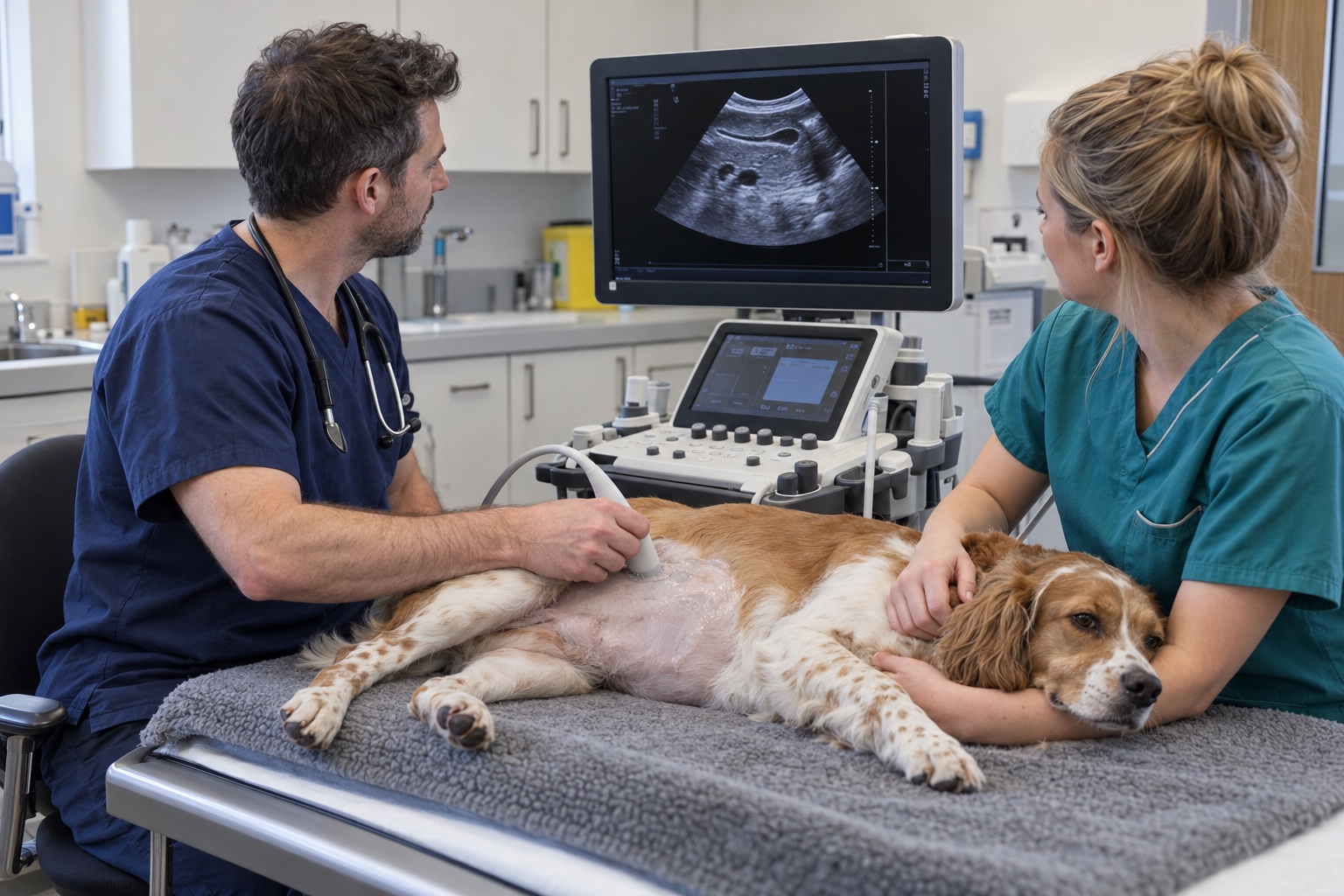
Useful tests may include a stool analysis, blood count, biochemical profile, urinalysis and—when the history suggests it—tests of clotting. Abdominal radiographs or ultrasound can help investigate obstruction, intestinal wall changes, masses or disease outside the gastrointestinal tract.
Endoscopy and biopsy are not required for every dog. They are considered when signs persist or recur, first-line tests do not explain the problem, or direct examination of the stomach, upper intestine or colon is likely to change treatment.
Available through veterinary referral
A complete digestive work-up for suitable persistent or complex cases.
For stable dogs referred by their usual veterinary practice, Fabrizio Tucciarone provides postgraduate-qualified internal-medicine, ultrasonography and gastrointestinal endoscopy support. The investigation is tailored to the clinical question rather than applying every test to every patient.
Internal-medicine assessment
History, examination findings, previous treatment and laboratory results are brought together into a prioritised plan.
Abdominal ultrasonography
Ultrasound may help assess the intestinal wall, abdominal organs, lymph nodes, masses, fluid and other changes relevant to the signs.
Endoscopy and biopsy
Gastroduodenoscopy or colonoscopy can provide direct visualisation and mucosal samples when this is the most useful next step.
Appointments are arranged through your usual vet, who remains responsible for emergency care and ongoing coordination.
Common questions
Blood in dog poo FAQs
Is a small amount of bright-red blood in dog poo always an emergency?
Not always, particularly if it is a single small streak and your dog otherwise seems completely well. However, contact your veterinary practice for advice. Repeated bleeding, a larger amount, diarrhoea, pain, vomiting, weakness, pale gums or any change in behaviour needs prompt assessment.
What does bright-red blood in dog poo mean?
Fresh red blood usually comes from the lower bowel, rectum or anal area. Colitis, straining, parasites and irritation are among the possibilities, but appearance alone cannot identify the cause.
Why is my dog’s poo black and tarry?
Black, sticky or tar-like stool may contain digested blood from the stomach or upper small intestine. It warrants prompt veterinary advice, especially with vomiting, weakness, abdominal pain, reduced appetite or pale gums.
Why is there blood and jelly-like mucus in my dog’s poo?
Fresh blood and mucus commonly occur when the large bowel is inflamed, which is often described as colitis. Causes vary, so contact your vet if it is repeated, your dog seems unwell or there are other symptoms.
Should I take a stool sample to the vet?
A recent sample in a clean, sealed container may be useful if your practice asks for one. A clear photograph can also help. Wash your hands afterwards and keep the sample away from food, children and other pets.
Can I give my dog human medicine for bloody diarrhoea?
No. Some human medicines are unsafe for dogs or may worsen bleeding. Do not start, stop or change any medicine unless your veterinary team has advised you to do so.
Can I book directly with Mobile Vet Referral?
Please contact your usual veterinary practice first. Your vet can provide urgent treatment if needed and arrange referral when internal-medicine assessment, abdominal ultrasound, endoscopy or biopsy would help answer the clinical question.