
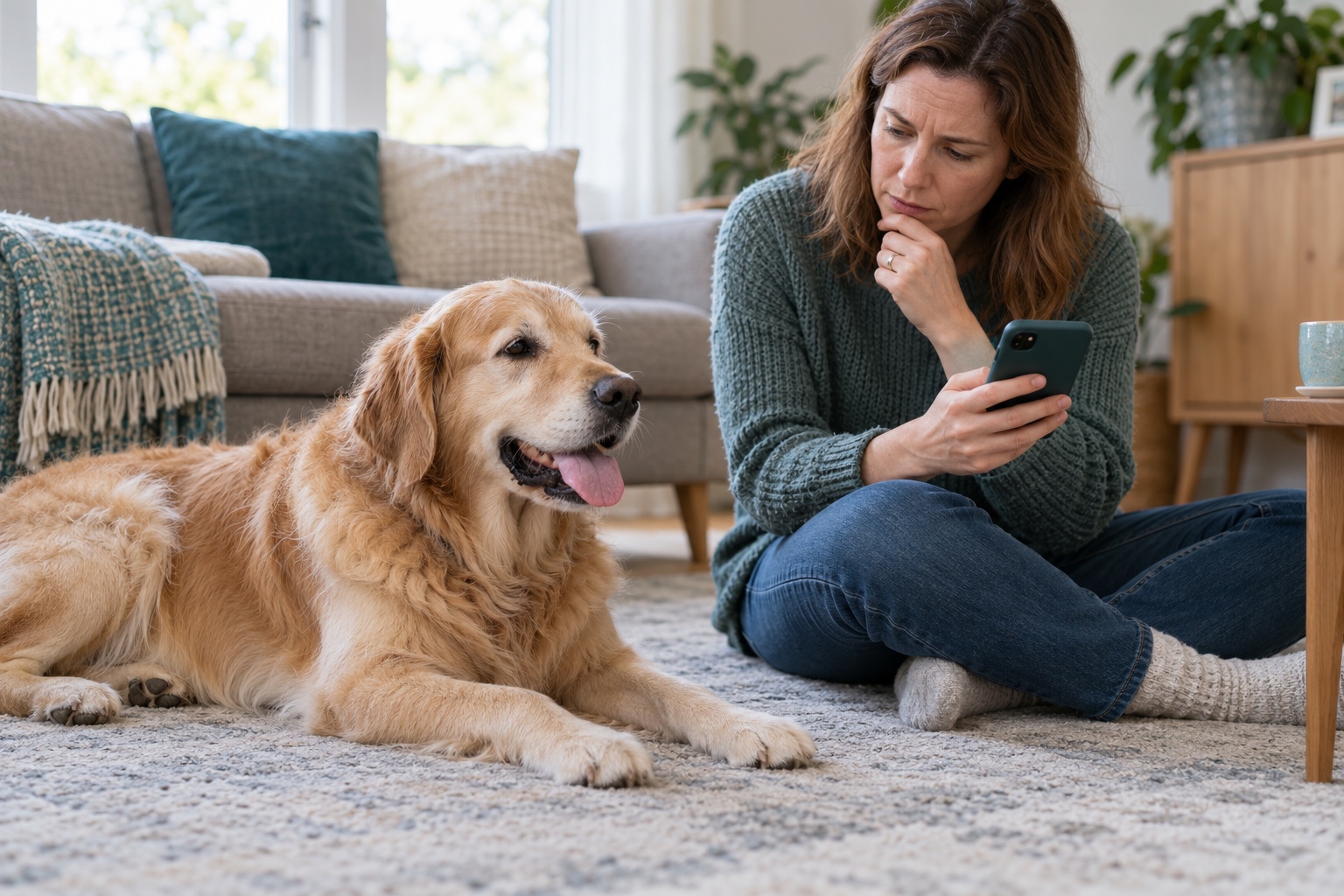
The short answer
Panting can be normal—but panting at rest, at night or without a clear trigger should not be ignored.
Dogs pant to lose heat, and temporary panting after exercise, excitement or a stressful event is common. It should begin to settle once your dog is cool, calm and rested.
Contact your veterinary practice if the panting is new, excessive, repeatedly interrupts sleep, happens in a cool room, or comes with coughing, weakness, pain, increased thirst, a swollen abdomen or reduced exercise tolerance. The pattern alone cannot identify the cause.
What is the difference between panting, fast breathing and breathing difficulty?
Owners often use these phrases interchangeably, but the distinction can help your vet understand what is happening.
- Panting
- Rapid, shallow breathing, usually with the mouth open and tongue visible. It is an important cooling mechanism in dogs.
- Fast breathing
- An increased respiratory rate that may occur with the mouth open or closed. It can follow exercise or anxiety, but may also accompany pain, fever, heart or lung disease.
- Breathing difficulty
- Increased effort—not just speed. Watch for pronounced chest or abdominal movement, an extended neck, elbows held out, abnormal gum colour or an inability to settle.
A dog can pant and have breathing difficulty at the same time. If effort is increased, treat the situation as urgent rather than trying to count the rate at home.
MSD Veterinary Manual: Clinical signs of respiratory disease
When is panting normal?
Panting commonly follows exercise, play, excitement, travel or a warm environment. Some dogs also pant briefly during a stressful event, such as a car journey or veterinary visit.
Normal panting has an understandable trigger and settles as the dog cools and relaxes. Move your dog to a cool, well-ventilated place, stop activity and offer fresh water. Do not force drinking and do not try to close or cover the mouth.
Flat-faced dogs, overweight dogs, dogs with thick coats and very young or old dogs can be less efficient at losing heat. They deserve particular caution in warm or humid conditions.
Why is my dog panting while resting or at night?
There is no single explanation. Your vet will interpret the panting alongside temperature, activity, medications, examination findings and other changes at home.
Heat, recent exercise or excitement
A dog may continue panting for a short period after activity or excitement. However, panting that is becoming more intense, does not settle in a cool room or follows relatively little exertion can indicate overheating or reduced exercise tolerance.
Pain or discomfort
Dogs in pain may pant, pace, change posture, become reluctant to move or struggle to settle overnight. The painful area is not always obvious, and dogs do not always cry or limp.
Stress, fear or anxiety
Fireworks, thunderstorms, separation, travel and unfamiliar situations can trigger panting. Look for other body-language clues such as pinned ears, a tucked tail, hiding, lip licking or avoiding eye contact. Recurrent anxiety still warrants veterinary discussion, especially when the behaviour is new.
Airway or lung disease
Upper-airway narrowing, laryngeal problems, brachycephalic obstructive airway syndrome, tracheal or bronchial disease, pneumonia, fluid around the lungs and other respiratory disorders can alter breathing. Coughing, noisy breathing, exercise intolerance or a change in bark may provide additional clues.
Heart or circulatory disease
Heart disease does not always cause coughing. Some dogs first show faster breathing during sleep, reduced stamina, weakness or collapse. Panting can make it difficult to judge the underlying respiratory rate, which is why a sleeping measurement may sometimes be helpful.
MSD Veterinary Manual: Heart failure in dogs and cats
Hormonal or metabolic illness
Cushing syndrome can cause panting alongside increased thirst and urination, increased appetite, muscle weakness, a pot-bellied appearance or skin and coat changes. Fever, anaemia and several other systemic illnesses can also increase breathing.
MSD Veterinary Manual: Cushing syndrome
Medication effects
Corticosteroids and some other medicines can increase panting. Do not stop prescribed medication without veterinary advice. Tell your vet the exact drug, dose and when the panting began in relation to treatment.
What if my dog is panting and shaking?
Panting and trembling together can occur with fear, pain, nausea or overheating. The combination is more concerning when there is no clear emotional trigger or when it comes with weakness, vomiting, diarrhoea, abnormal gum colour, confusion, collapse or difficulty breathing.
Move your dog away from heat or activity, keep the environment calm and contact your veterinary practice for advice. If heatstroke is possible, begin appropriate cooling and arrange urgent veterinary care.
What should I record for my vet?
A short video and a simple diary are often more useful than trying to describe the episode from memory.
- When the panting starts, how long it lasts and whether your dog can settle
- Room or outdoor temperature and any recent exercise, travel or excitement
- Whether the mouth is open or closed and whether breathing effort is increased
- Coughing, noisy breathing, weakness, collapse or reduced stamina
- Signs of pain, restlessness, vomiting, diarrhoea or a swollen abdomen
- Changes in thirst, urination, appetite, weight, skin or coat
- All medication and supplements, including recent dose changes
Record from a safe distance. Do not delay urgent care to obtain a perfect video.
How do I count my dog’s sleeping respiratory rate?
Only count when your dog is fully asleep, cool and not panting. Watch the chest: one rise and fall is one breath. Count for 30 seconds and multiply by two, or count for a full minute.
A sleeping respiratory rate below 30 breaths per minute is commonly expected in a normal dog. A repeated rate above 30, or a clear upward change from your dog’s usual pattern, should be discussed with your vet. This measurement is a monitoring tool, not a diagnosis.
Do not rely on the number if your dog looks distressed. Increased effort, abnormal posture, gum-colour change or collapse needs immediate veterinary assessment regardless of the measured rate.
What might my vet check?
Your vet may begin by observing your dog before handling, because stress can change breathing. A full examination may include temperature, gum colour, heart and lung sounds, pulse quality, hydration, abdominal palpation and assessment for pain.
Tests are selected from the history and examination rather than performed automatically. They may include blood and urine tests, blood pressure, oxygen measurement, chest radiographs, an ECG, echocardiography or other imaging. Endocrine testing, abdominal ultrasound or airway investigation may be appropriate for selected dogs.
An unstable dog may need oxygen and stabilisation before diagnostic imaging. The safest sequence matters more than completing every possible test.
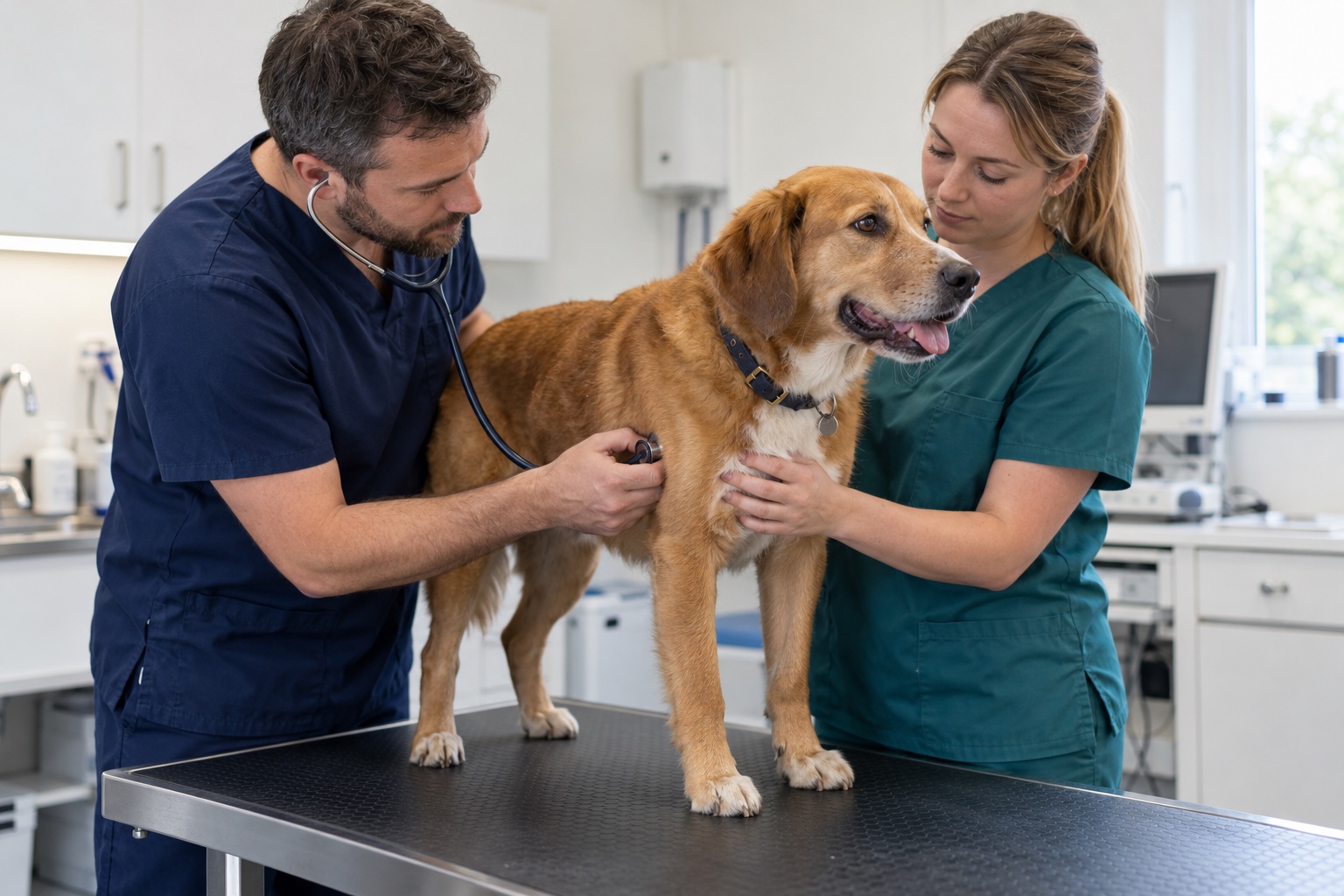
Available through veterinary referral
A staged investigation when first-line assessment does not explain the panting.
For suitable stable referrals, Fabrizio Tucciarone provides postgraduate-qualified internal-medicine, imaging and cardiopulmonary support in collaboration with the primary veterinary team.
Internal medicine
Clinical history, blood and urine findings, medications and concurrent signs are brought together into a prioritised investigation plan.
Cardiac assessment
Where examination findings suggest cardiovascular disease, ECG assessment and echocardiography may help define the next step.
Respiratory investigation
Imaging is generally considered before invasive airway tests. Bronchoscopy can be useful in selected stable patients when direct examination and sampling will change management.
Appointments are arranged through your usual veterinary practice. Referral location and the safest diagnostic pathway are confirmed for the individual case.
Common questions
Dog panting FAQs
Why is my dog panting while resting?
Panting at rest can follow heat, recent activity, excitement or anxiety, but it can also accompany pain, fever, medication effects, airway disease, heart or lung disease, anaemia, or hormonal illness. If there is no clear short-lived reason, or the pattern is new or persistent, arrange a veterinary assessment.
Why is my dog panting so much at night?
Night-time panting may become more noticeable because the house is quiet, but it can also reflect pain, anxiety, heat, medication effects or an underlying medical problem. Record when it happens, whether your dog can settle, and any cough, thirst, weakness or behaviour change, then discuss the pattern with your vet.
Is panting with shaking an emergency?
Panting and shaking can occur with fear, pain or overheating, but the combination may also accompany serious illness. Seek urgent veterinary advice if your dog is weak, confused, vomiting, struggling to breathe, has abnormal gum colour, a swollen abdomen, has been exposed to heat or cannot settle.
How can I tell panting from fast breathing?
Panting usually involves an open mouth and rapid, shallow breaths. Fast breathing can also occur with the mouth closed and may be easier to recognise while a dog is sleeping. Increased effort, pronounced chest or abdominal movement, an extended neck or elbows held away from the body are more concerning than rate alone.
Should I count my dog’s breathing rate?
A sleeping respiratory rate can be useful when your dog is fully asleep, cool and not panting. Count one rise and fall of the chest as one breath. A repeated rate above your dog’s usual level, or above 30 breaths per minute, warrants veterinary advice; any breathing effort or distress needs urgent help regardless of the number.
Can I book directly with Mobile Vet Referral?
Please speak to your usual veterinary practice first. Your vet can examine your dog, provide urgent care if needed and arrange referral when further internal-medicine, cardiac, imaging or respiratory investigation would be useful.