
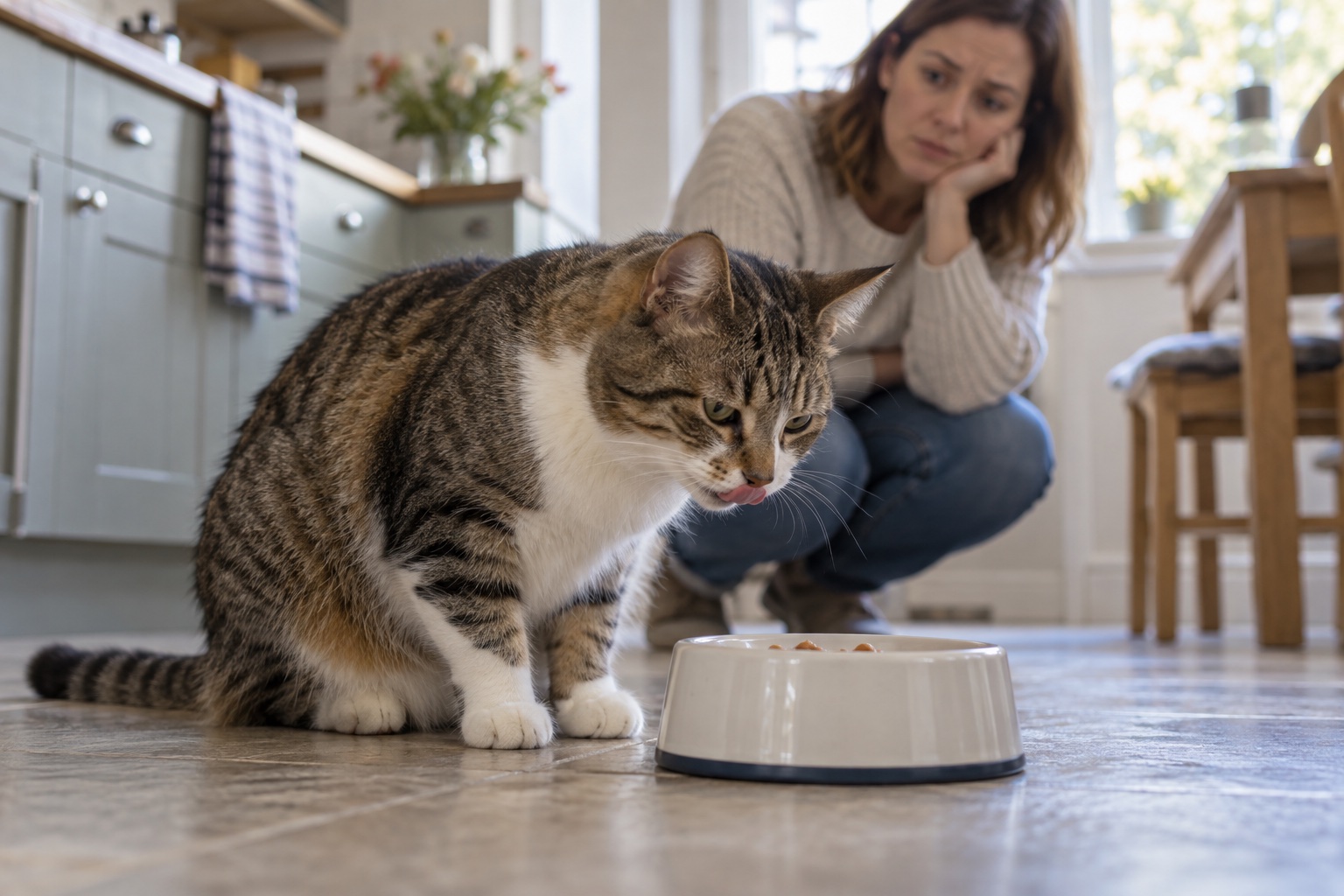
The short answer
Call your vet if vomiting happens again or your cat seems unwell.
A single episode in a bright, comfortable cat may settle, but monitor closely. Contact your veterinary practice if your cat vomits more than once, the episodes recur, or you notice changes in appetite, thirst, toileting, weight, behaviour or energy.
Frequent vomiting is not simply “normal for cats”. It is a symptom with many possible causes, and the pattern helps your vet decide how urgently your cat should be examined.
PDSA: Vomiting in catsWas it vomiting, regurgitation, coughing or a hairball?
These events can look similar, but the distinction changes the list of likely causes.
Vomiting
Vomiting is active. Nausea may cause lip licking, drooling or repeated swallowing, followed by retching and visible contractions of the abdomen.
Regurgitation
Regurgitation is usually passive and often happens soon after eating or drinking. Undigested food may be brought up with little warning or effort.
Coughing
A coughing cat may crouch, extend the neck and produce foam that is swallowed. A video can help your vet identify whether the event began in the airways or digestive tract.
Hairballs
A true hairball contains a compact, often cylindrical mass of hair. Occasional hairballs can occur, but frequent hairballs or repeated unproductive retching deserve veterinary advice.
Why does my cat keep vomiting?
Vomiting describes a symptom, not a diagnosis. Your cat’s age, the timing of episodes and any other changes help narrow the possibilities.
Diet, eating behaviour and hair
Eating too quickly, a sudden food change, scavenging, food intolerance and swallowed hair can all be associated with vomiting. These explanations should not be assumed when episodes persist or other signs develop.
Parasites, inflammation and digestive disease
Parasites, gastritis, pancreatitis and chronic intestinal inflammation can cause intermittent or persistent vomiting. Some cats also develop diarrhoea, poor appetite or weight loss, while others show only subtle signs.
Disease outside the stomach
Kidney disease, liver disease, diabetes and hyperthyroidism can all cause nausea or vomiting. Increased thirst, changes in urination, appetite change and weight loss are particularly useful details to report.
Foreign material and obstruction
String, thread, elastic bands and small toys can obstruct or injure the digestive tract. A cat with an obstruction may vomit, stop eating, become quiet or develop abdominal pain. This can be life-threatening and requires urgent assessment.
Growths and infiltrative disease
Benign or malignant growths and diseases that thicken the stomach or intestinal wall can cause chronic vomiting. These possibilities cannot be distinguished from symptoms alone.
Cornell Feline Health Center: VomitingWhat does the appearance of cat vomit mean?
The contents can provide clues, but they cannot diagnose the cause on their own:
- Undigested food: note how soon it appeared after eating and whether there was retching
- Yellow or green fluid: may contain bile, especially when the stomach is relatively empty
- White foam or clear fluid: can occur with nausea but is not specific to one condition
- Hair: an occasional hairball can occur, but frequent episodes still warrant discussion
- Fresh red blood or dark coffee-ground material: seek prompt veterinary advice
- String, plant material or an unknown object: contact your vet urgently
Take a photograph before cleaning up if it is safe to do so. Do not rely on online colour charts to decide whether your cat needs care.
Merck Veterinary Manual: Vomiting in catsWhat should I record for my vet?
A short diary and a video of an episode can make the first consultation much more informative. Record:
- When the vomiting started and how often it occurs
- Its relationship to meals, drinking, medication or going outdoors
- Whether there is retching and abdominal effort
- What the material looks like and whether it contains food, hair or blood
- Appetite, water intake, urination, stools and recent body weight
- Any access to string, plants, human medication, chemicals or unusual food
- Current medicines, supplements, diet and parasite prevention
In a multi-cat household, temporary separation around meals and litter trays may help identify which cat is affected and what they are actually eating.
What tests might my vet recommend?
The first steps are a detailed history and physical examination. Your vet may assess hydration, temperature, mouth, thyroid region, abdomen, body weight and muscle condition.
Depending on the pattern and examination, investigations may include blood tests, urinalysis, faecal testing, thyroid testing, pancreatic markers, X-rays or abdominal ultrasound. No single fixed panel is right for every cat.
Supportive treatment may be needed at the same time, particularly if vomiting has caused dehydration or reduced food intake.
Merck Veterinary Manual: Vomiting in cats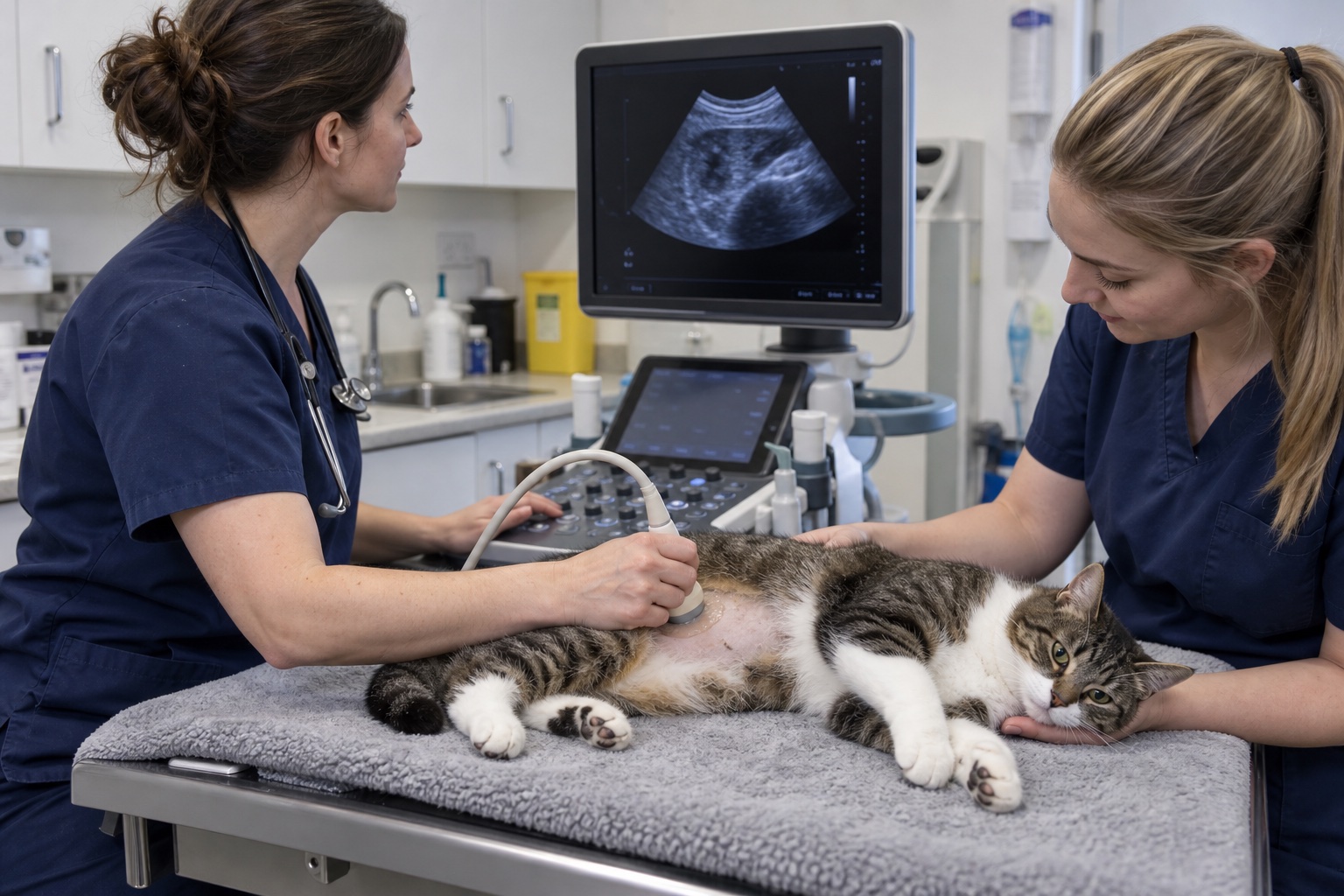
What if the first tests are normal?
Normal initial results can rule out or make some conditions less likely, but they do not explain continuing vomiting by themselves.
Your vet may recommend reviewing the diary, repeating selected tests, completing a properly planned diet trial or imaging the abdomen. If digestive disease remains a concern, tissue samples may sometimes be needed to distinguish inflammation from other conditions.
The most useful next step depends on what has already been tested, how often your cat vomits and whether there is weight loss, appetite change or another clinical finding.
Merck Veterinary Manual: Disorders of the stomach and intestines in catsAvailable through veterinary referral
A coordinated investigation for persistent vomiting.
For suitable referred cats, Fabrizio Tucciarone provides postgraduate-qualified internal medicine support and can coordinate a full digestive work-up.
Internal medicine assessment
A structured review brings together the vomiting pattern, examination, diet, previous results and response to treatment.
Explore internal medicineAbdominal ultrasonography
Ultrasound can assess the stomach, intestines, pancreas, liver, kidneys and abdominal lymph nodes, and may guide further sampling.
Explore ultrasonographyEndoscopy and biopsies
Gastroduodenoscopy can examine accessible parts of the upper digestive tract and obtain mucosal biopsies in selected cases.
Explore endoscopyEndoscopy does not reach every part of the intestine and samples only the lining. The most appropriate imaging and biopsy route is chosen for the individual cat and clinical question.
Merck Veterinary Manual: Disorders of the stomach and intestines in catsAppointments are arranged through your usual veterinary practice and take place at selected local referral clinics.
Common questions
Cat vomiting FAQs
Why does my cat keep being sick but seem fine?
Cats can appear well between episodes even when an underlying problem is present. If vomiting is recurring, becoming more frequent or accompanied by weight loss, appetite change, increased thirst, diarrhoea or another change, arrange a veterinary assessment.
Is it normal for a cat to vomit hairballs?
An occasional hairball can occur, especially in cats that groom heavily. Frequent hairballs or repeated vomiting should not automatically be treated as normal because digestive disease, skin irritation or excessive grooming may be involved.
Why is my cat vomiting undigested food?
Food may be vomited after nausea and abdominal contractions, or it may be regurgitated passively soon after eating. A video of an episode and details of its timing can help your vet distinguish the two.
What does yellow or white cat vomit mean?
Yellow fluid may contain bile and white material may be foam, but colour alone cannot identify the cause. Frequency, effort, appetite, hydration and other symptoms are more useful. Blood, dark coffee-ground material or repeated vomiting requires prompt veterinary advice.
Should I stop my cat eating or drinking after vomiting?
Do not restrict water or make a major feeding change without veterinary advice. Cats can dehydrate, and prolonged poor food intake can be dangerous. Contact your practice for guidance that is appropriate for your cat, particularly after repeated vomiting.
Can I book a vomiting investigation directly with Mobile Vet Referral?
Please contact your usual veterinary practice first. Your vet can assess your cat, provide immediate treatment where needed and arrange referral with the relevant history and previous results.